







The cause of obesity is a complex issue, and there are many contributing factors.
These factors include excessive caloric intake, genetics and low physical activity levels. Just like protein, starch, fat, alcohol and other carbohydrates, sugar is a source of calories in the diet. Excessive calories from any source, including sugar, can lead to weight gain, increasing the risk of obesity and other chronic diseases. A systematic review of the evidence concluded that “if there are any adverse effects of sugar, they are due entirely to the calories it provides.”1 Additionally, three authoritative scientific organizations—the U.S. Institute of Medicine,2 European Food Safety Authority3 and U.K. Scientific Advisory Committee on Nutrition4—each conducted extensive scientific reviews of added sugars and obesity and found no unique role for added sugars in the development of obesity.
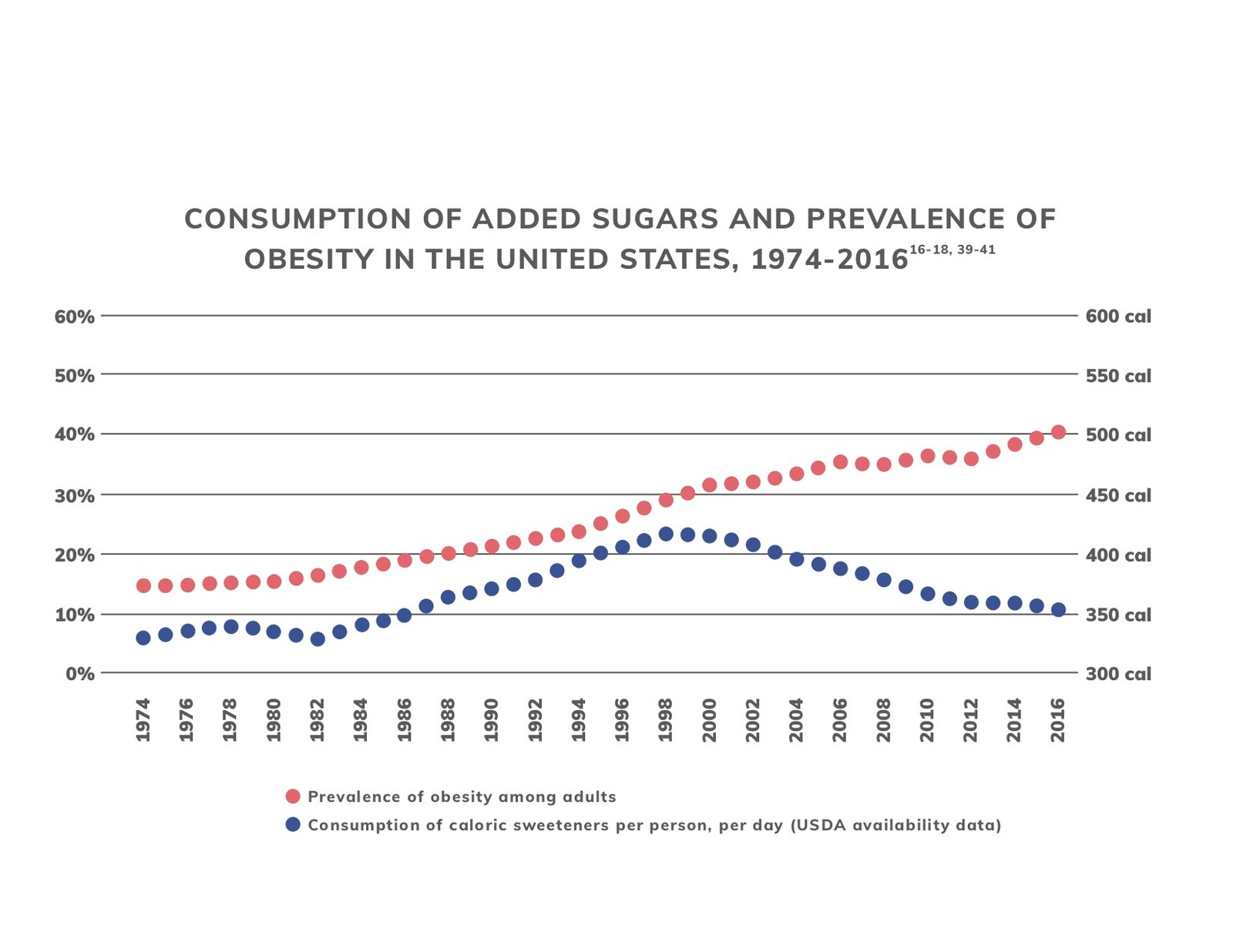
While emerging research will always reveal new information, the scientific evidence consistently shows that a healthy lifestyle based on moderation, a variety of food choices and physical activity tends to lead to the best outcomes when compared with simply focusing on cutting out or adding one ingredient or another.9-13 As long as people are conscious of their caloric intake, they can enjoy sugar in moderation.
References:
- Kahn R, Sievenpiper J. Dietary Sugar and Body Weight: Have We Reached a Crisis in the Epidemic of Obesity and Diabetes? We Have, but the Pox on Sugar Is Overwrought and Overworked. Diabetes Care. 2014;37:957-962.
- Institute of Medicine. Dietary Reference Intakes for Energy, Carbohydrate, Fiber, Fat, Fatty Acids, Cholesterol, Protein, and Amino Acids. Washington, DC: The National Academies Press. 2005.
- European Food Safety Authority Panel on Dietetic Products, Nutrition, and Allergies. Scientific Opinion on Dietary Reference Values for carbohydrates and dietary fibre. EFSA Journal. 2010;8:1462.
- Scientific Advisory Committee on Nutrition. Carbohydrates and Health. UK: The Stationery Office Limited; 2015:2.
- U.S. Department of Agriculture Economic Research Service. Sugar and Sweeteners Yearbook Tables, Table 51 (Refined cane and beet sugar: estimated number of per capita calories consumed daily, by calendar year). Available at: https://www.ers.usda.gov/data-products/sugar-and-sweeteners-yearbook-tables.aspx. Updated September 6, 2018. Accessed November 26, 2018.
- Flegal KM, Kruszon-Moran D, Carroll MD, Fryar CD, Ogden CL. Trends in Obesity Among Adults in the United States 2005-2014. JAMA. 2016;315(21):2284-2291. doi:10.1001/jama.2016.6458.
- Ogden CL, Carroll MD. Prevalence of Overweight, Obesity, and Extreme Obesity Among Adults: United States, Trends 1960–1962 Through 2007–2008. National Center for Health Statistics. 2010. Available at: https://www.cdc.org/NHCS/data/hestat/obesity_adult_07_08/obesity_adult_07_08.pdf. Accessed October 19, 2018.
- Fryar CD, Carroll MD, Ogden CL. Prevalence of Overweight, Obesity, and Severe Obesity Among Adults Aged 20 and Over: United States, 1960–1962 through 2015–2016. Atlanta, GA: Centers for Disease Control and Prevention National Center for Health Statistics; 2018. Available at: https://www.cdc.gov/nchs/data/hestat/obesity_adult_15_16/obesity_adult_15_16.pdf. Accessed October 19, 2018.
- Anderson JJ, Celis-Morales CA, Mackay DF, et al. Adiposity among 132 479 UK Biobank participants; contribution of sugar intake vs other macronutrients. International Journal of Epidemiology. 2017;46(2):492–501.
- Khan TA, Sievenpiper JL. Controversies about sugars: results from systematic reviews and meta-analyses on obesity, cardiometabolic disease and diabetes. European Journal of Nutrition. 2016;55(Suppl 2):S25–S43.
- Jebb SA. Carbohydrates and obesity: from evidence to policy in the UK. The Proceedings of the Nutrition Society. 2015;74(3):215–220.
- Marriott BP, Olsho L, Hadden L, Connor P. Intake of added sugars and selected nutrients in the United States, National Health and Nutrition Examination Survey (NHANES) 2003–2006. Critical reviews in food science and nutrition. 2010;50(3):228–258.
- Sacks FM, Bray GA, Carey VJ, et al. Comparison of weight-loss diets with different compositions of fat, protein, and carbohydrates. The New England Journal of Medicine. 2009;360(9):859–873.
The Basics
Sugar & Health Sugar Basics Sugar is a carbohydrate. Let’s start there. Sugar is a carbohydrate. Carbohydrate: a macronutrient that includes […]
Learn More 🡢Sugar in the Total Diet
Sugar & the Diet Sugar in the Context of the Total Diet Sugar in the Total Diet Putting Added Sugars […]
Learn More 🡢