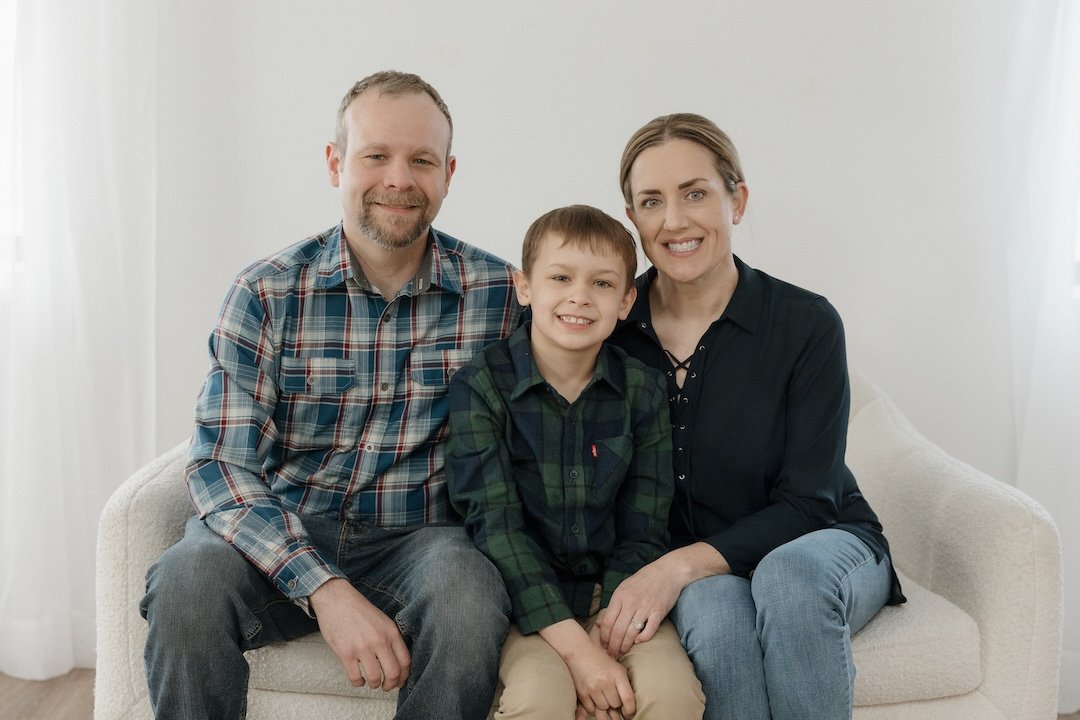







Brent has farmed sugar cane for 30 years. He has always enjoyed spending time on the farm, even before he began his career as a full-time sugar cane farmer. In fact, Brent and his family still live on the original 180 acres of land his grandfather purchased in the 1930s. Rivet and Sons have since been passed on to Brent’s father, Glynn Rivet. Brent and his brother, Clint Rivet, now manage the farm. Today, Rivet and Sons consists of 6,000 acres of sugar cane.
From an early age, Brent knew he wanted to farm. He enjoys working outdoors and seeing the satisfying results of his work. In 1995, Brent graduated from Louisiana State University with a degree in agricultural business. Since then, he and Clint have farmed sugar cane full-time. Brent says his degree contributed tremendously to his success: “A farmer today has to know a lot more than how to drive a tractor.” His education helped him learn more about the business aspects of farming, such as marketing, managing finances, leasing and keeping up with ever-changing technology.
While Brent values education very much, he believes experience is equally important. Along with sugar, he and his family previously grew corn and wheat and raised cattle. Today, Brent also farms soybeans.
Brent recognizes how the work of Rivet and Sons, along with all sugar farmers across the United States, has impacts both small and large. “Farming sugar supplies our country with a safe, reliable and domestic food supply, provides thousands of jobs and supports local businesses,” he says. Without sugar farmers, Brent would not have sugar to enjoy in his morning coffee or in homemade desserts (in moderation, of course).
Brent and his team often experiment with new ways to be more sustainable and progressive on the farm. Rivet and Sons is one of the few sugar farms that recently started farming on an 8-foot row. Traditionally, sugar cane is grown on a 6-foot row. Brent says, “The 8-foot row has allowed us to do more with less spacing and produce more sugar per acre.” The transition from a 6-foot to an 8-foot row has made operating Rivet and Sons more efficient while saving fuel and equipment. The 8-foot row also reduces soil compaction and erosion because farmers are cultivating 30% less land.
The sugar cane industry has provided for Brent and his family for three generations, and he hopes the next generation will continue farming. He wants the world to know that there is a lot of negative, false information about sugar. “It is real. It is natural. It is an important part of a balanced diet. And it is an important part of our economy,” Brent says. While farming is hard work, the labor is extremely rewarding for Brent, his family and our country.