The Sugar Association offers important science-based information about sugar, where it comes from and its role in a balanced diet and lifestyle.
Our publications help explain why sugar is in foods and answer frequently asked questions about sugar. Below, you will find a wide variety of resources for parents and kids, educators, health professionals and any person looking to learn more about real sugar. Should you have a question about sugar that is not answered on our website or in our informational brochures, feel free to contact us.
Explore the publications below. You can download as a PDF (in English or Spanish), or click “Order” to request, at no charge, any of the publications listed to be shipped directly to you by completing and submitting an order form
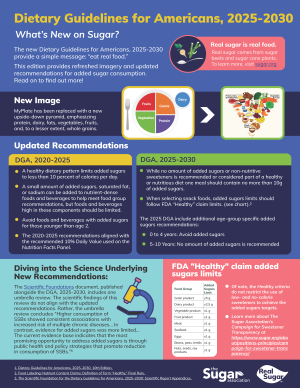
2025-2030 DGA Overview on Added Sugars
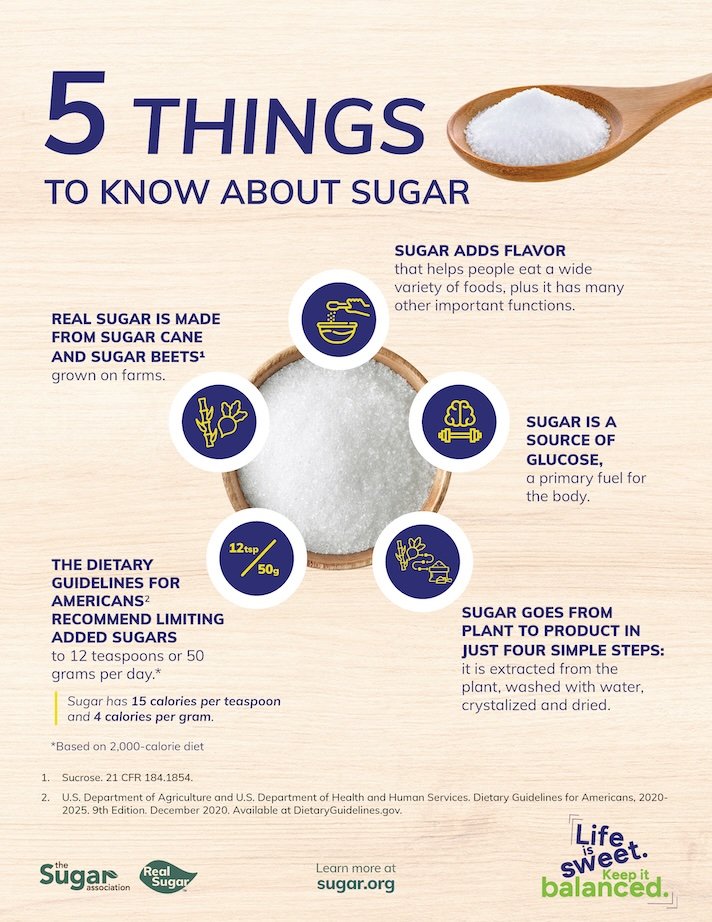
This infographic lays out the 2025-2030 Dietary Guidelines for Americans’ recommendations related to added sugars intake.
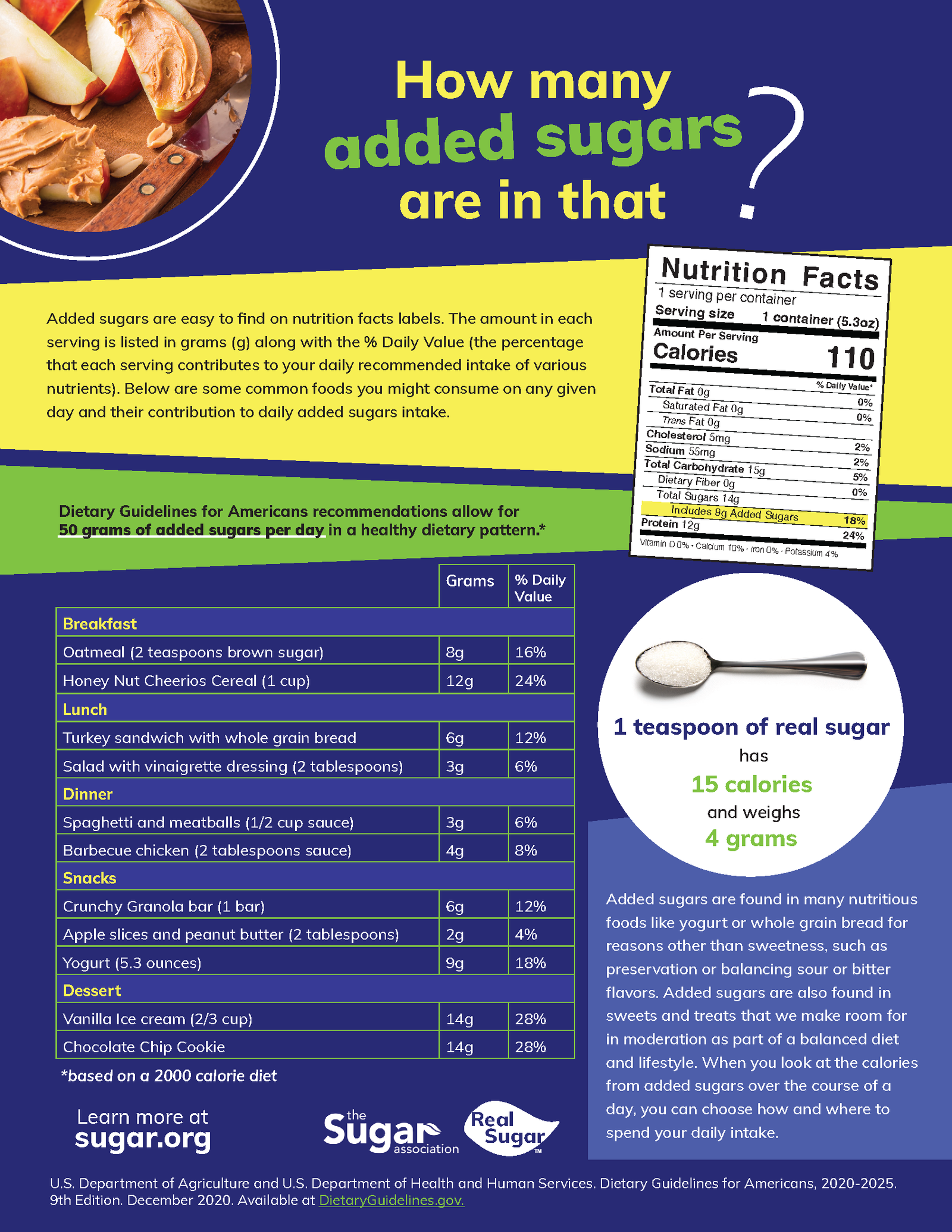
Added sugars are easy to find on nutrition facts labels. This infographic includes some common foods you might consume on any given day and their contribution to daily added sugars intake.
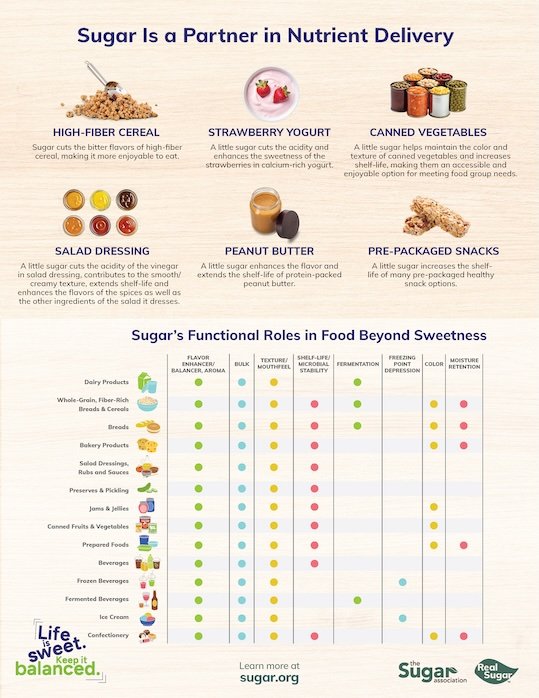
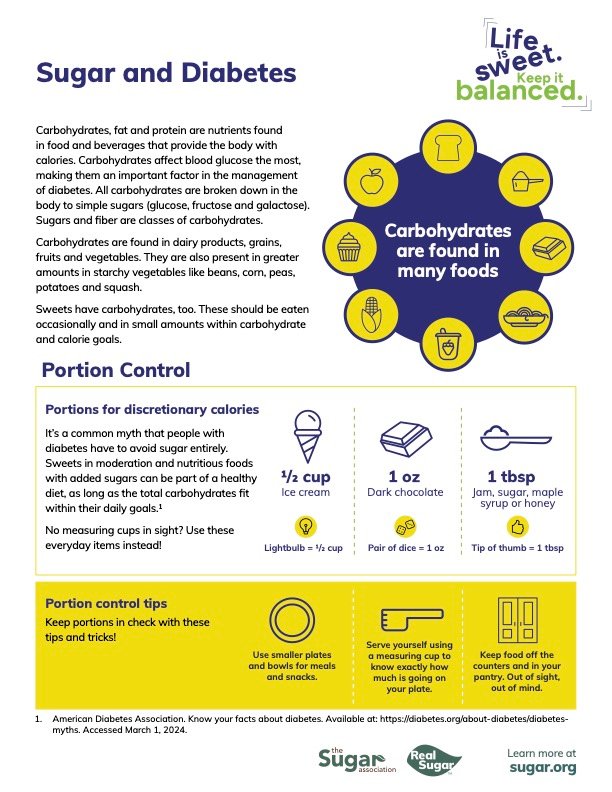
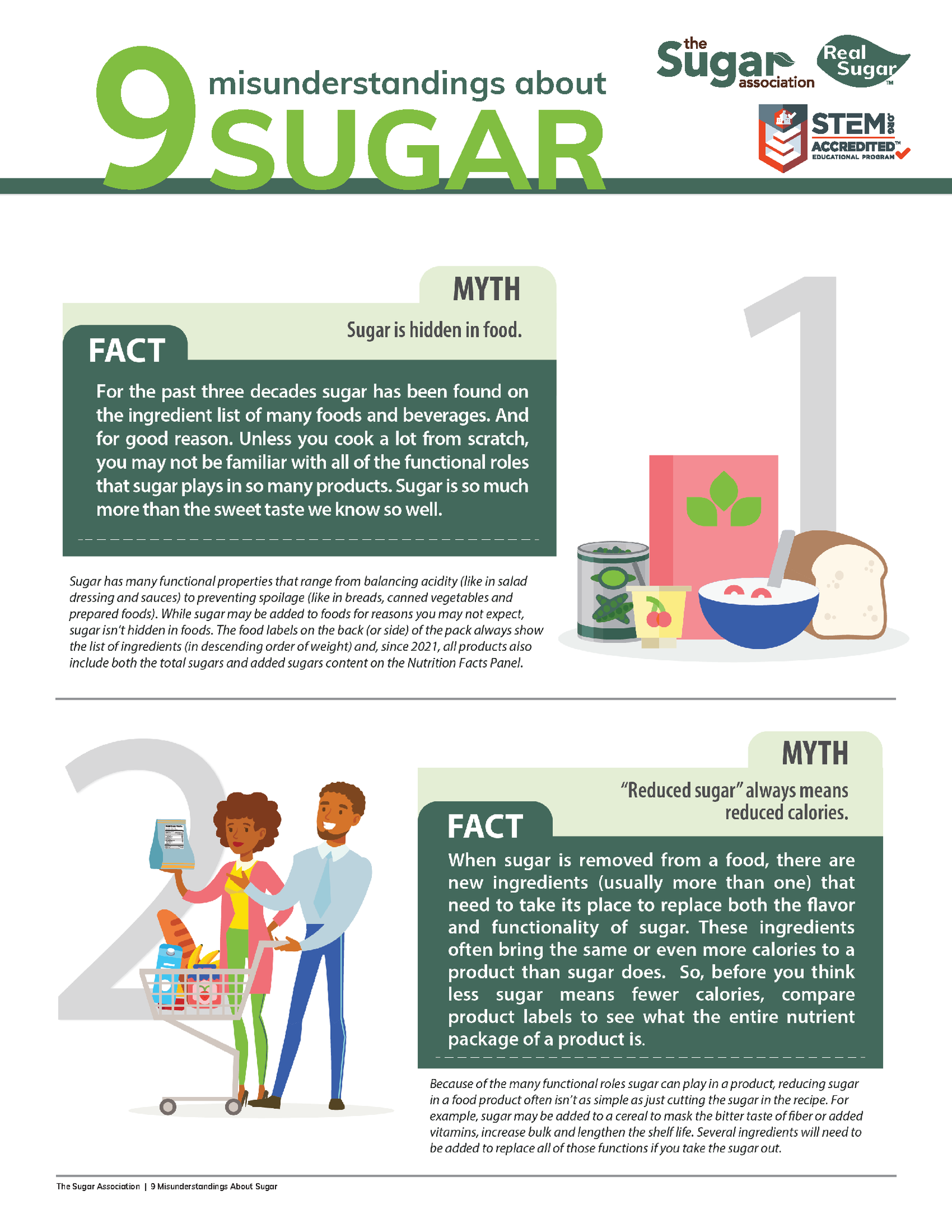
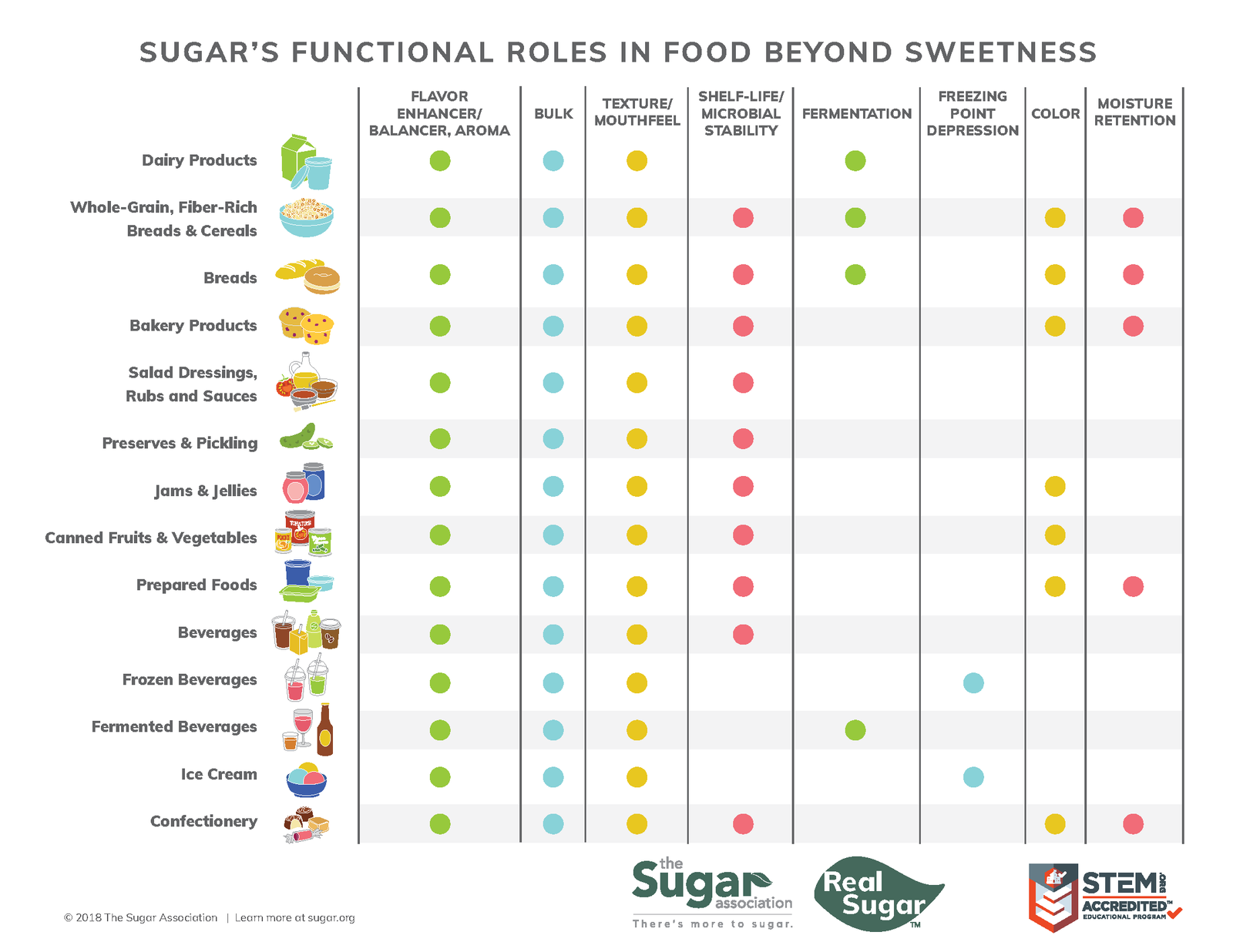
Sugar does much more than just sweeten! Find information about the many functions of sugar—including its role in nutrient delivery—in this infographic.
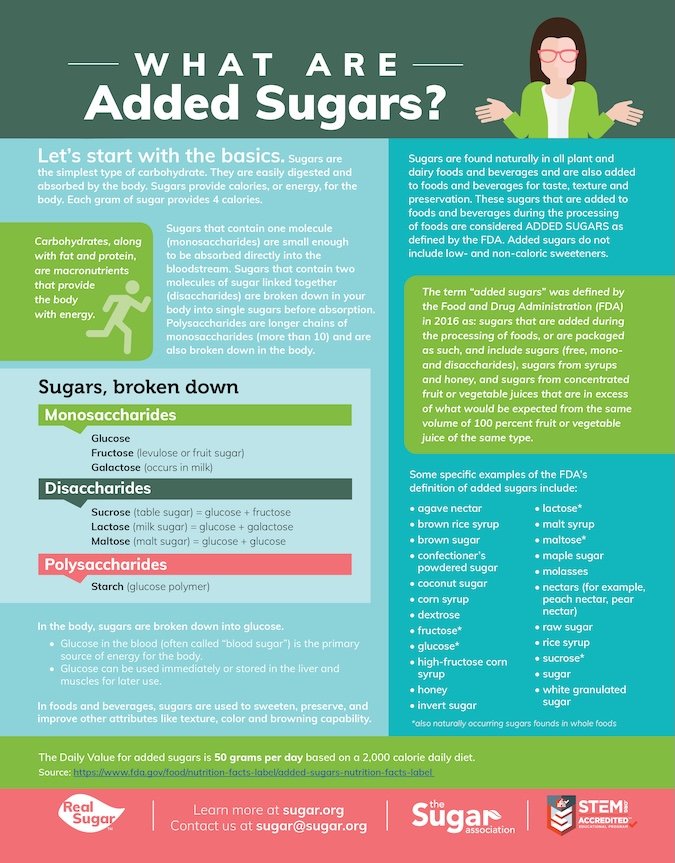
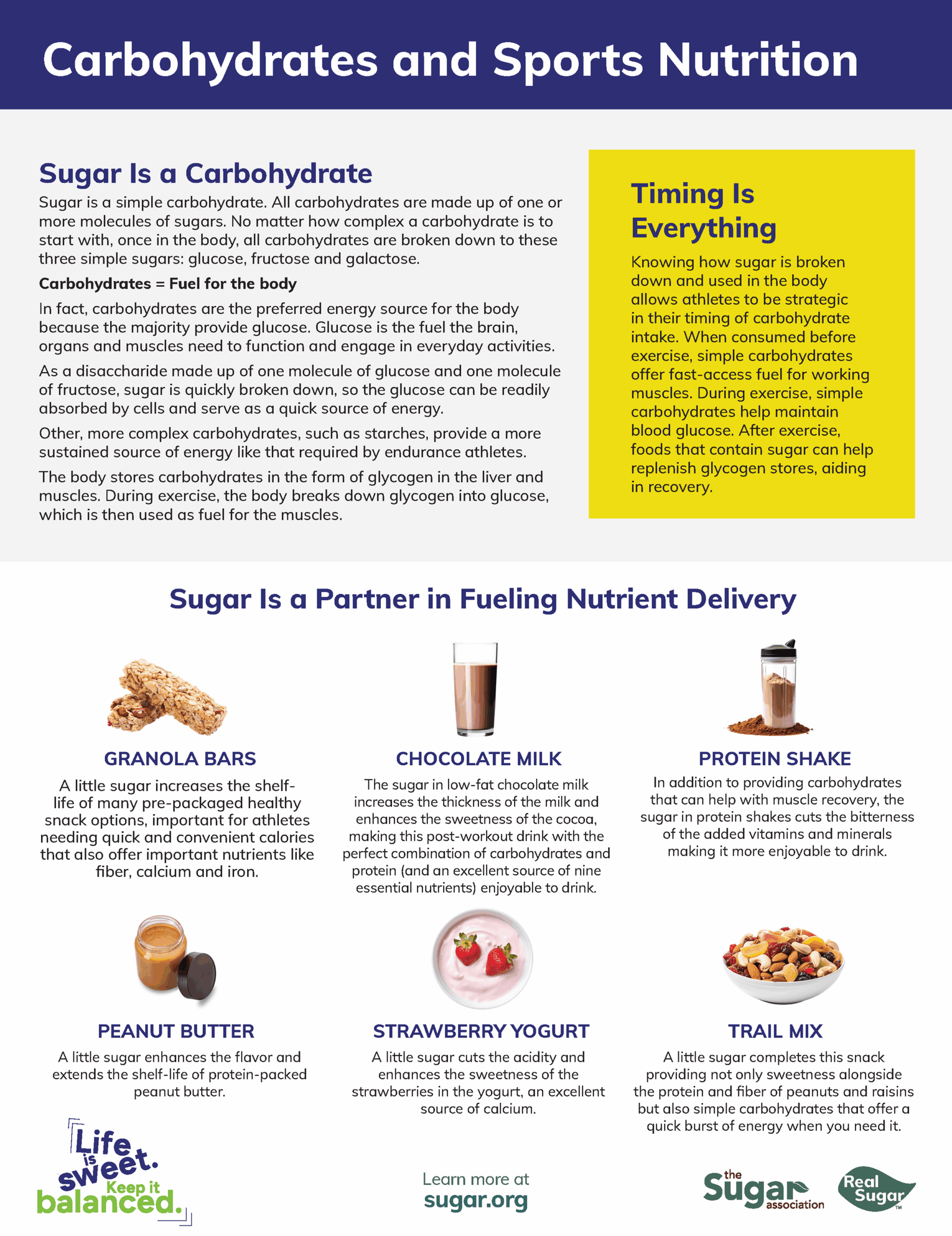
Carbohydrates play a crucial role in sports nutrition. This infographic explains that all carbohydrates are broken down into sugars so glucose (a simple sugar) can be used as fuel for the body, as well as the importance of timing carbohydrate intake for athletes.
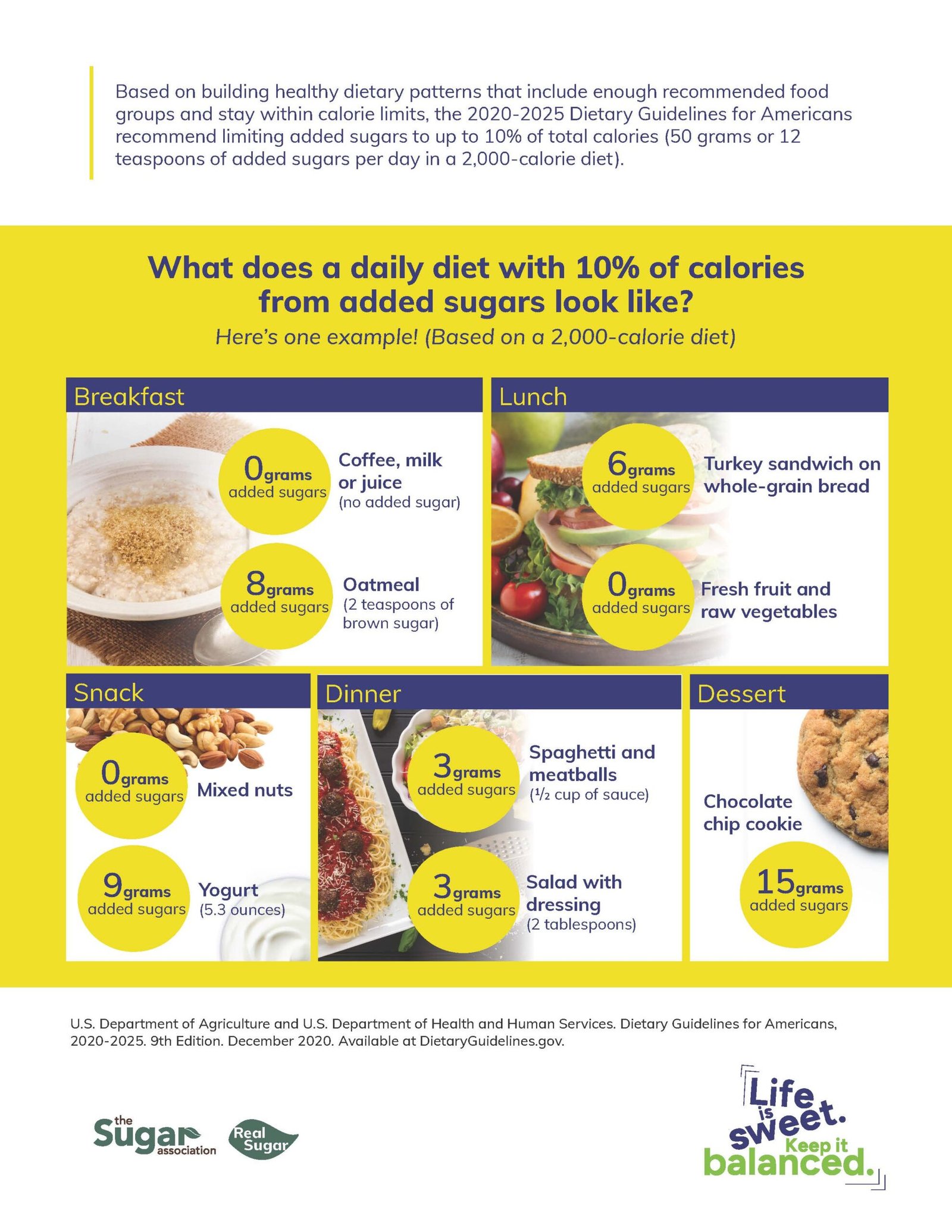
The Dietary Guidelines for Americans recommend limiting added sugars to 10% of daily calories. This infographic includes a sample daily diet that meets this recommendation.
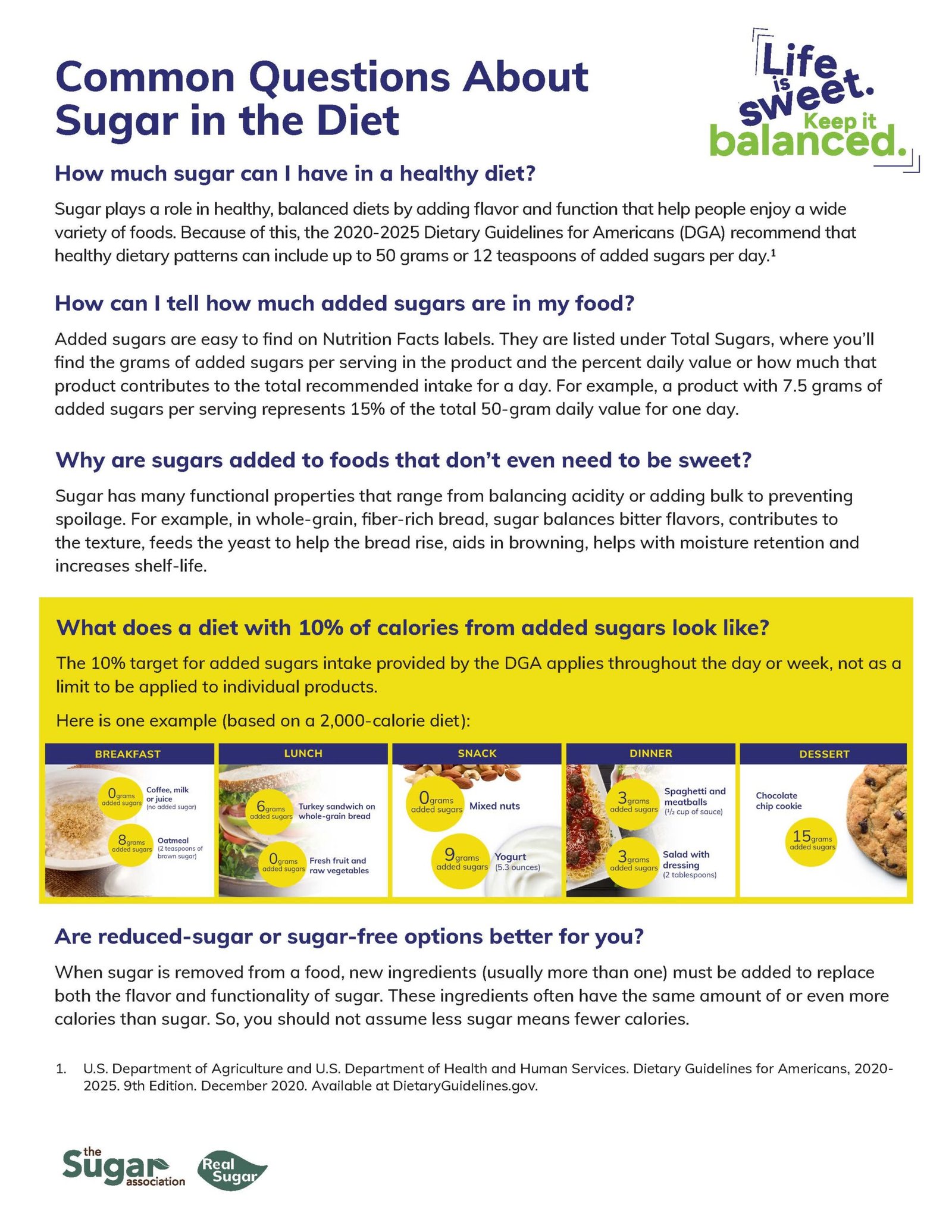
Check out this collection of commonly asked questions about sugar in the diet. How much sugar can I have in a healthy diet? What about sugar-free options? And more.
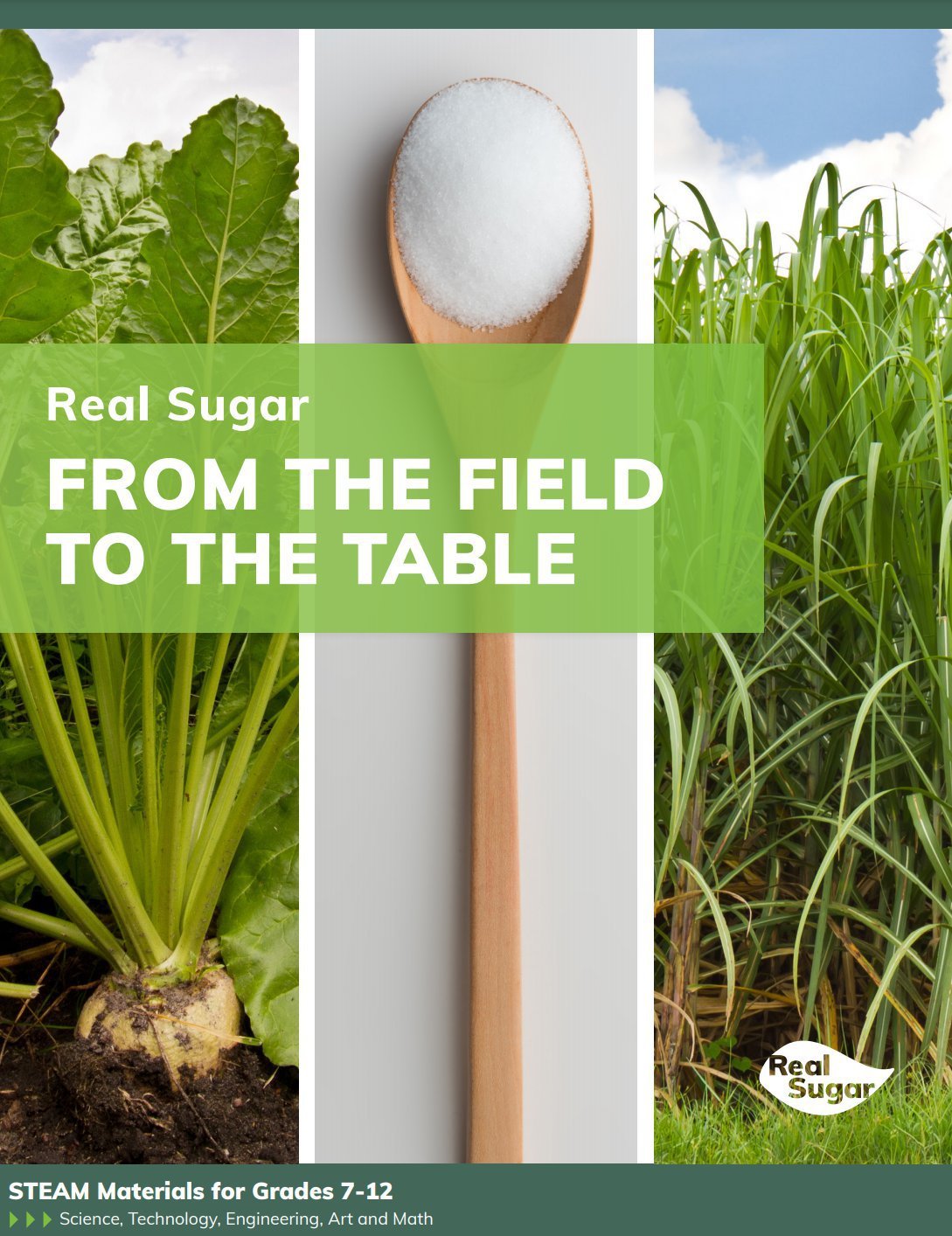
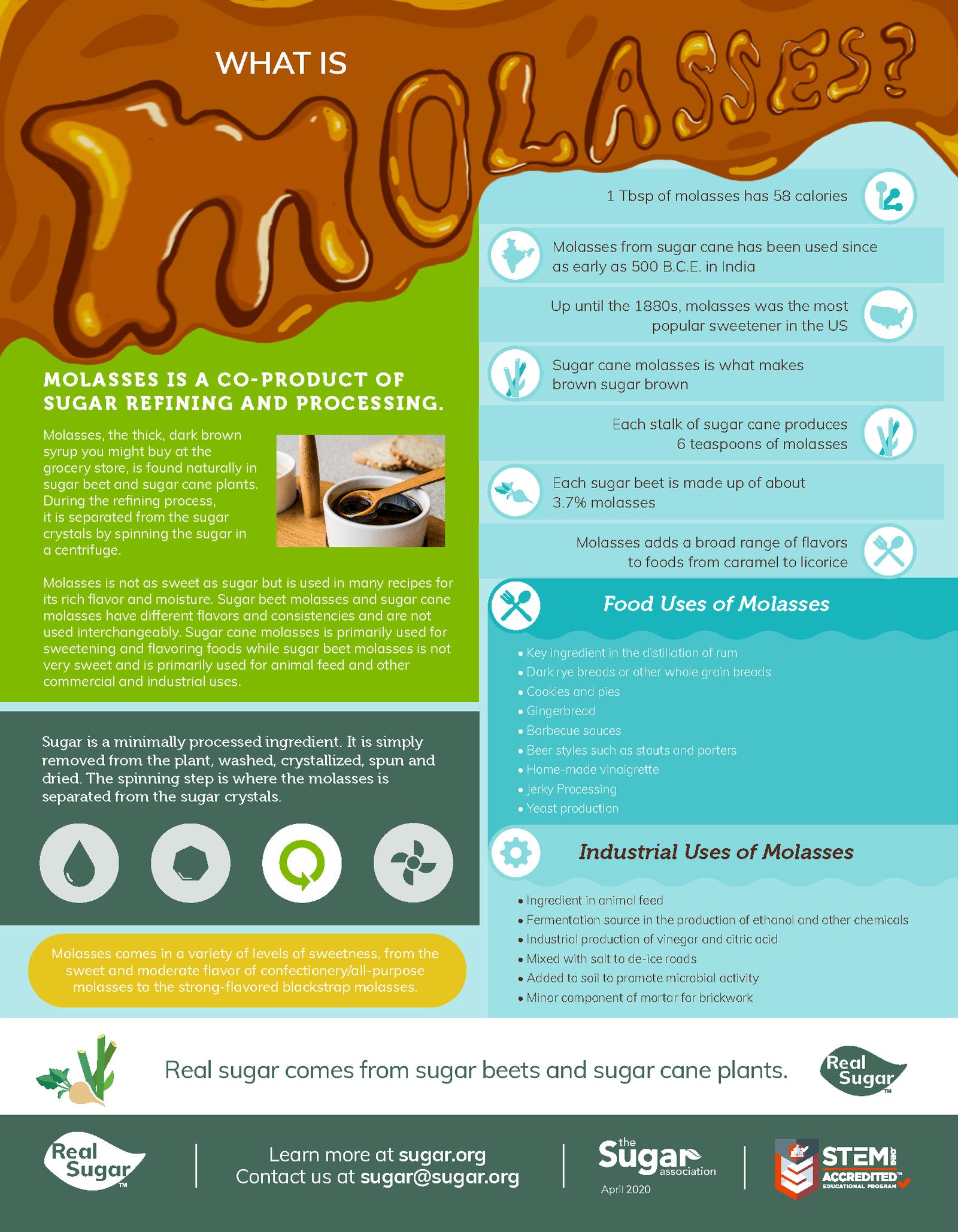
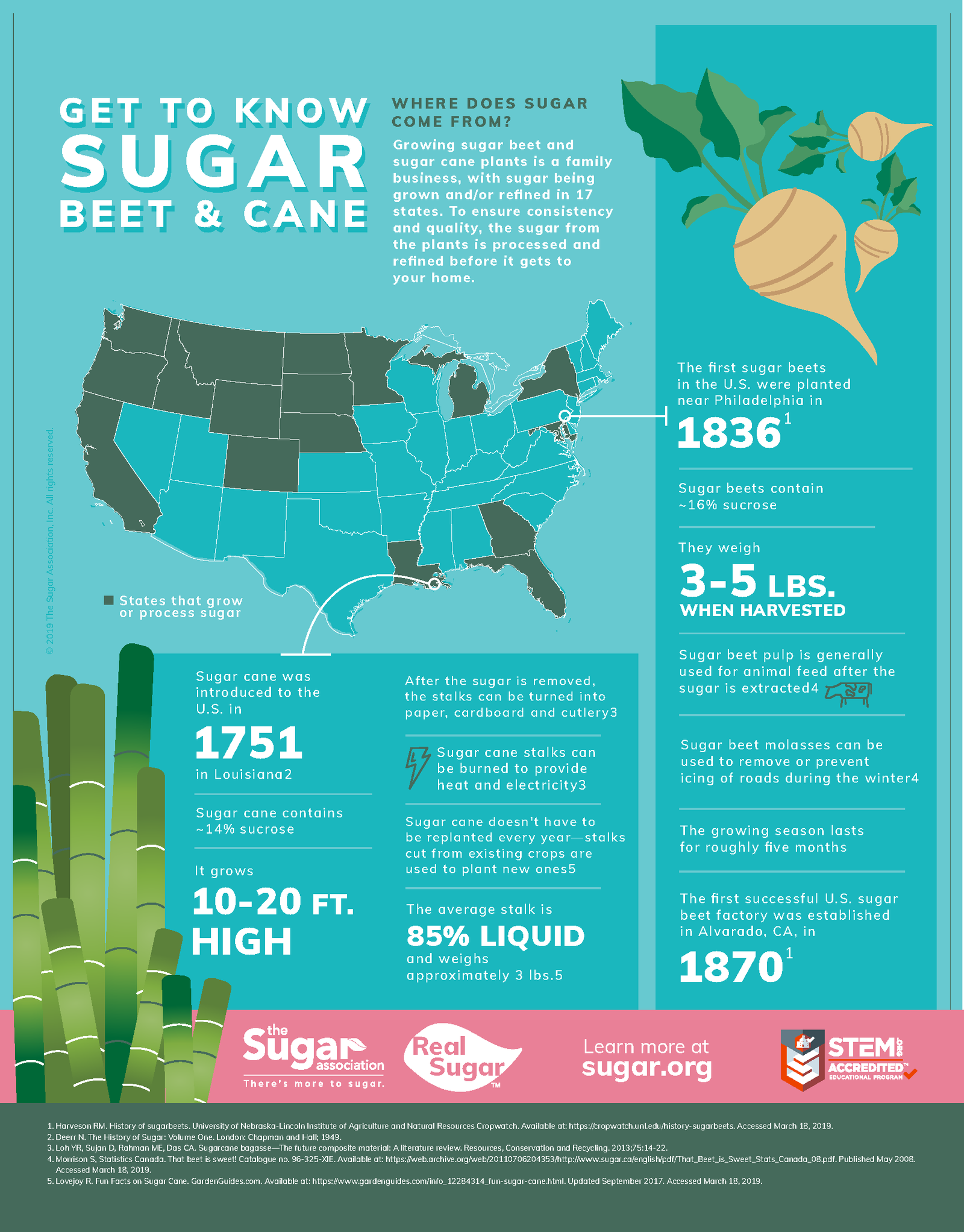
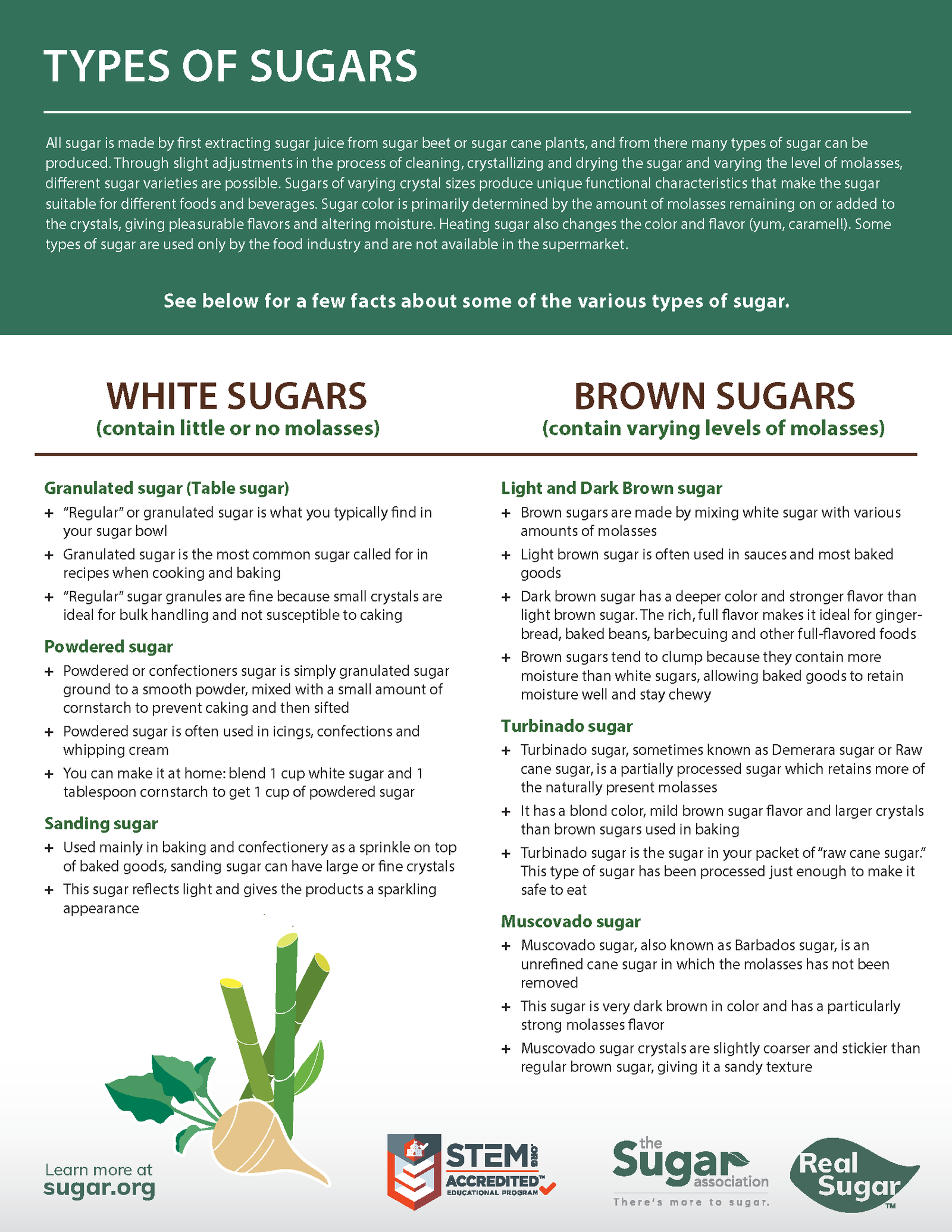
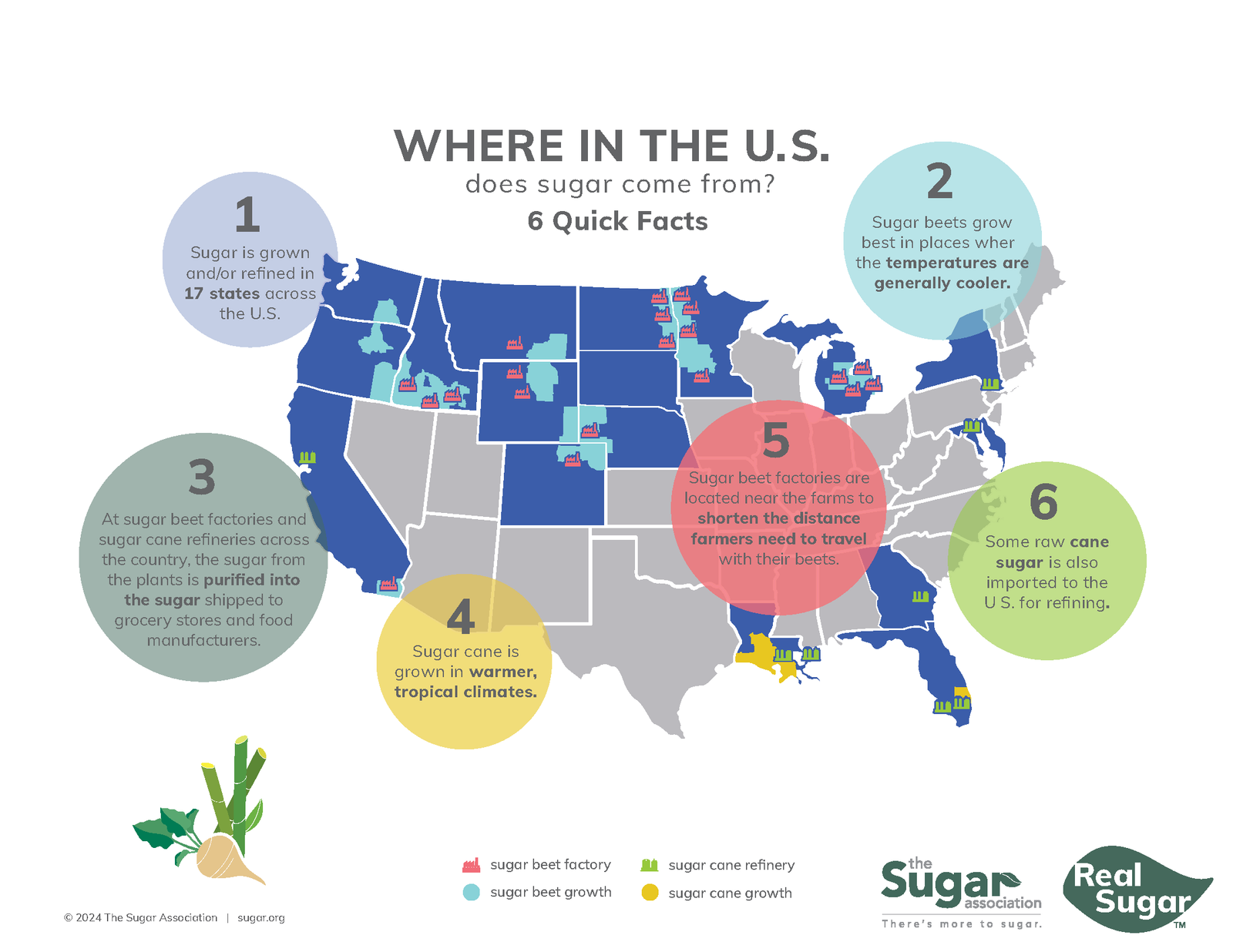
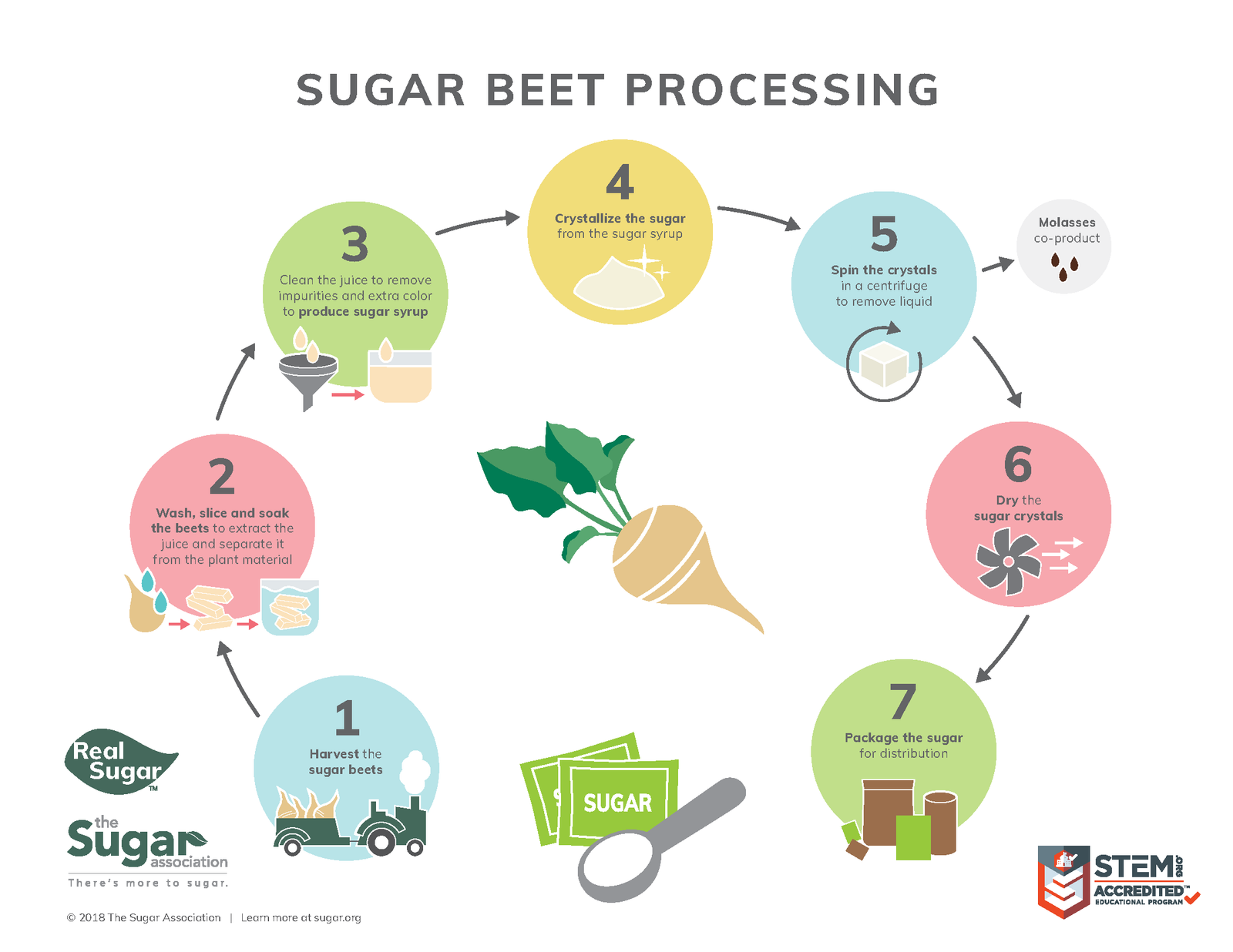
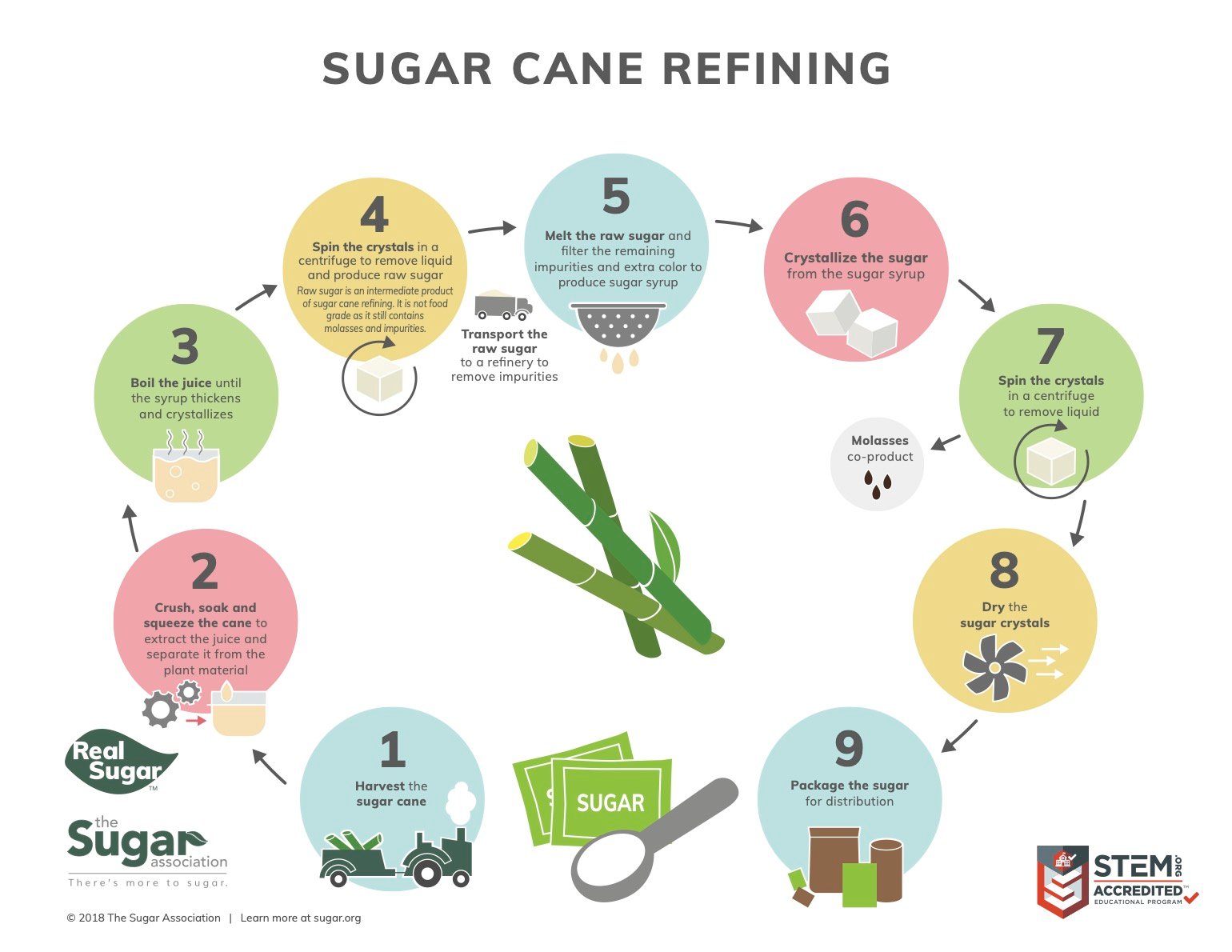
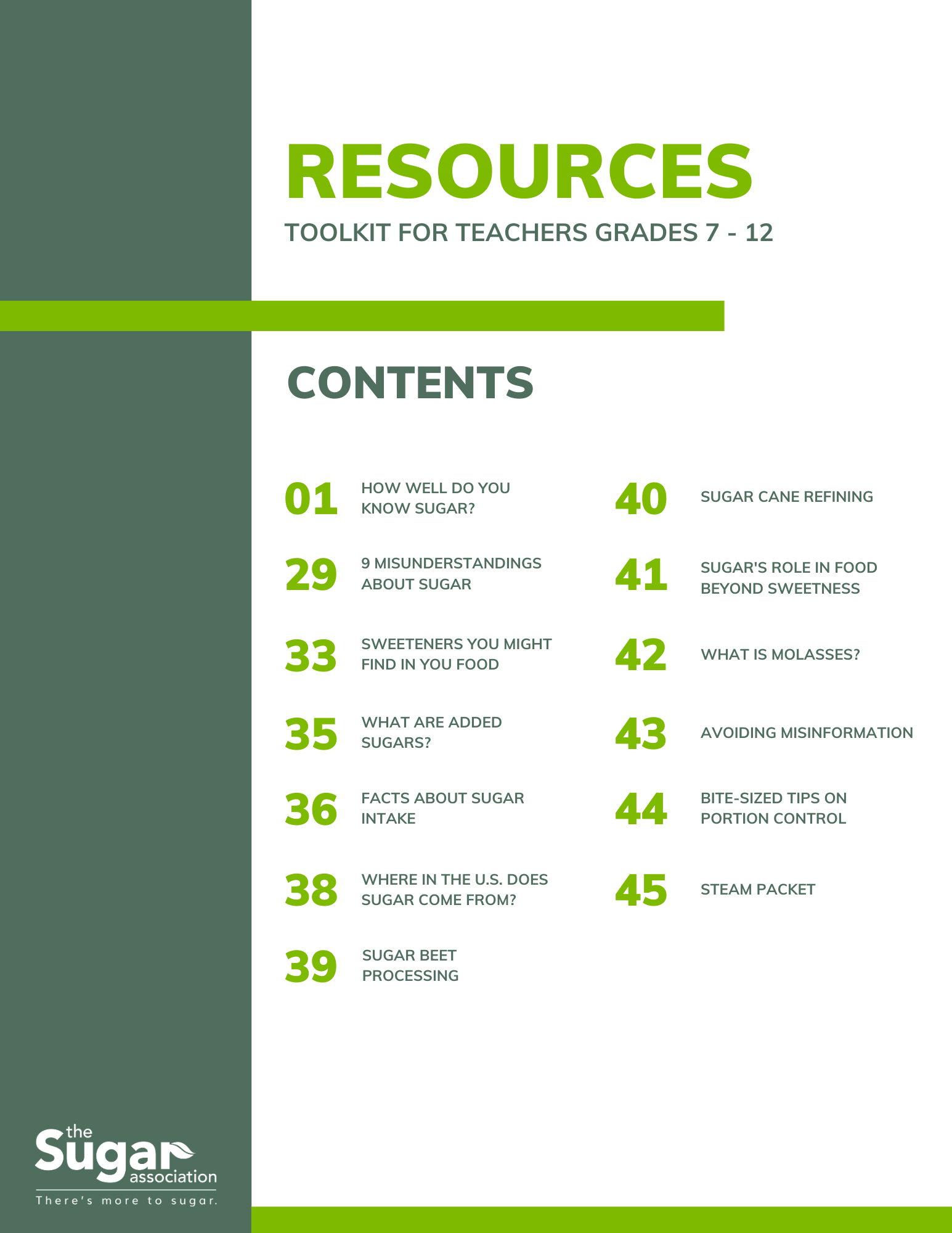
There is much more to sugar than you might think! Learn about sugar’s history, how it is naturally made by plants, its impact on the environment, why it is added to foods and more in this STEAM packet designed for grades 7-12.
This presentation is intended to compliment the Real Sugar: Field to Table STEAM packet. It includes links to the complimentary videos within the presentation as well as slide notes.
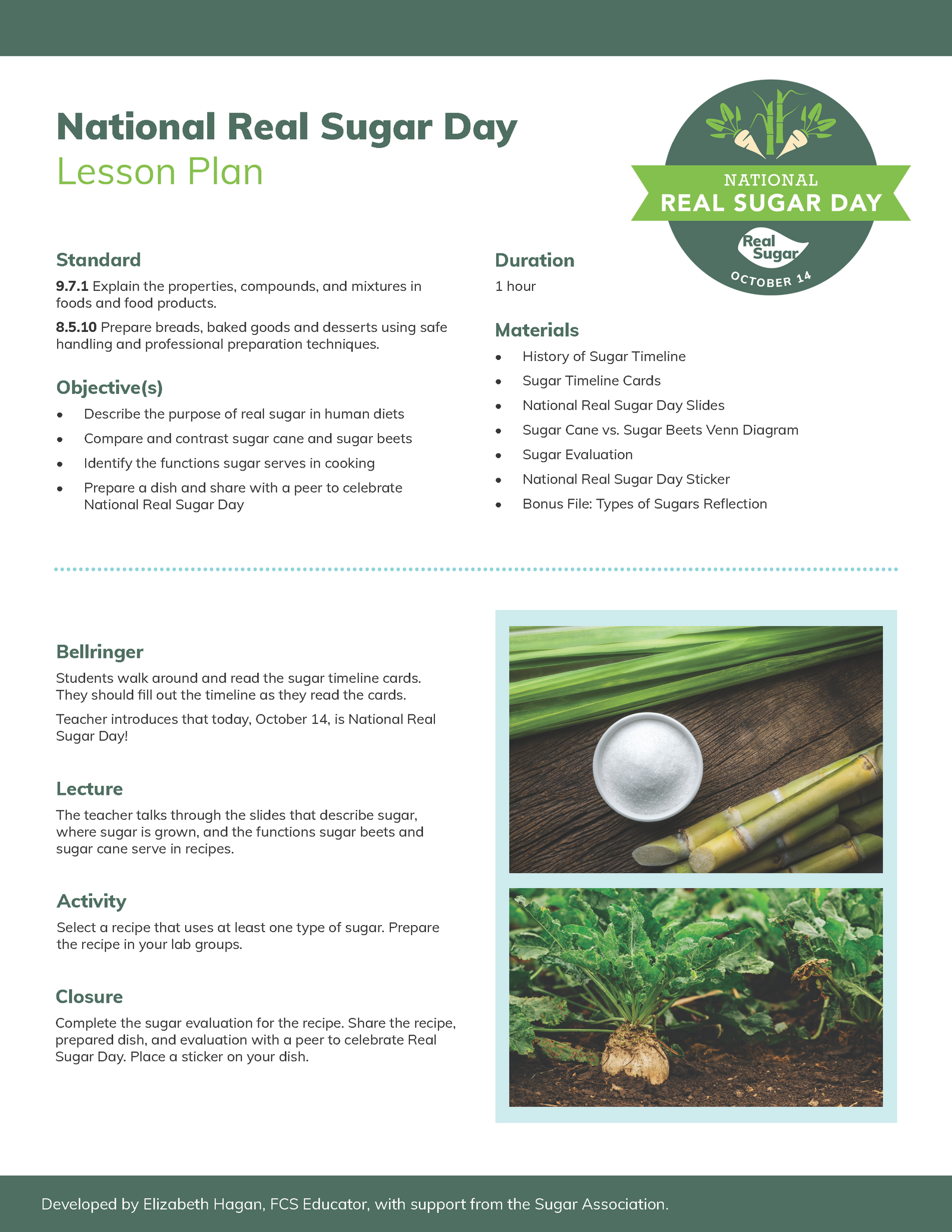
A lesson plan for grades 9-12 that teaches the origins of real sugar, where real sugar is grown, and how it functions in our diets and cooking. Includes a recipe to make to celebrate National Real Sugar Day on October 15!
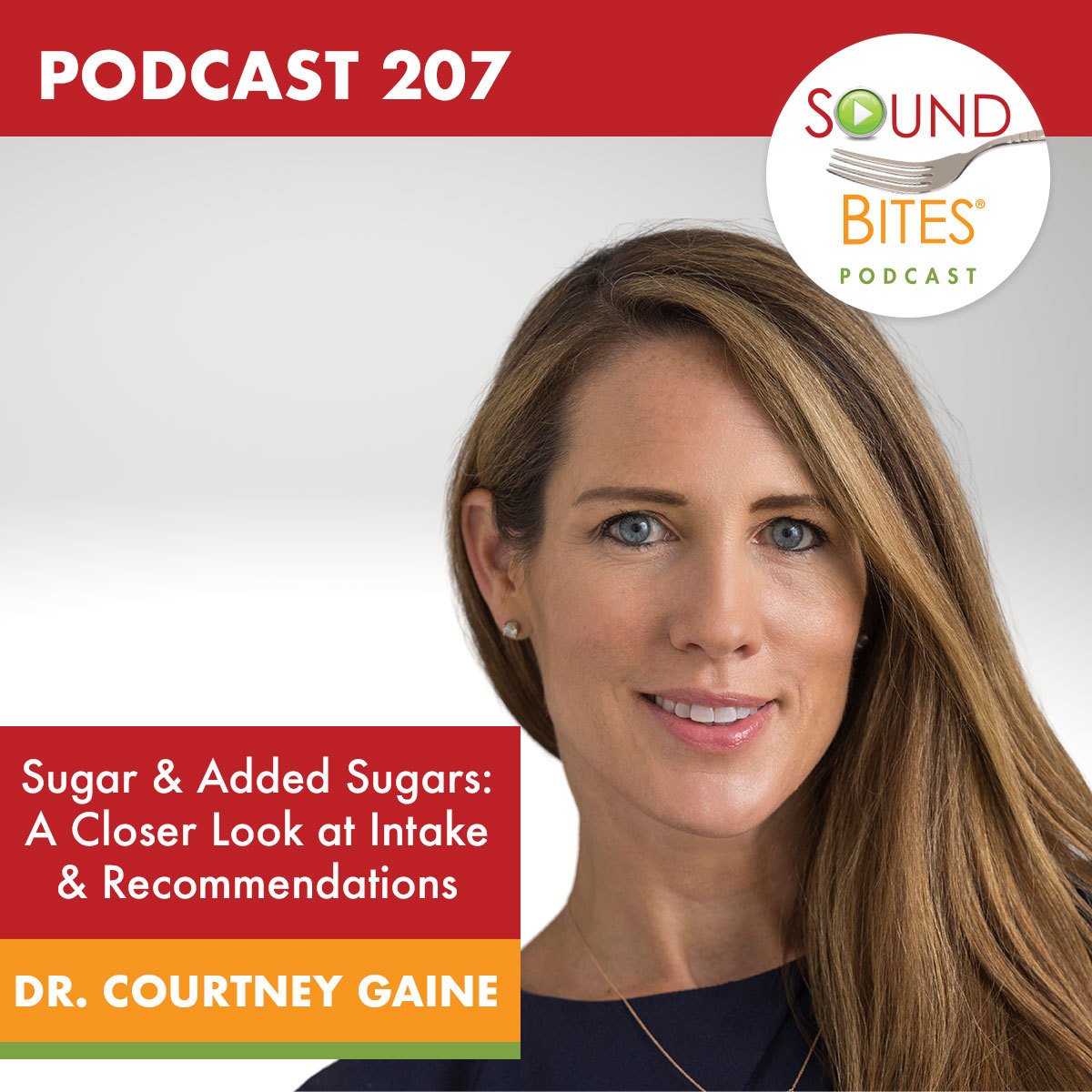
Podcast – Sugar & Added Sugars: A Closer Look at Intake & Recommendations
Resource description: Sound Bites Podcast host Melissa Joy Dobbins, RD, invited Dr. Courtney Gaine, PhD, RD, President and CEO of the Sugar Association to discuss sugar consumption trends and dietary guidance. Earn 1.25 FREE CEU credits for listening.
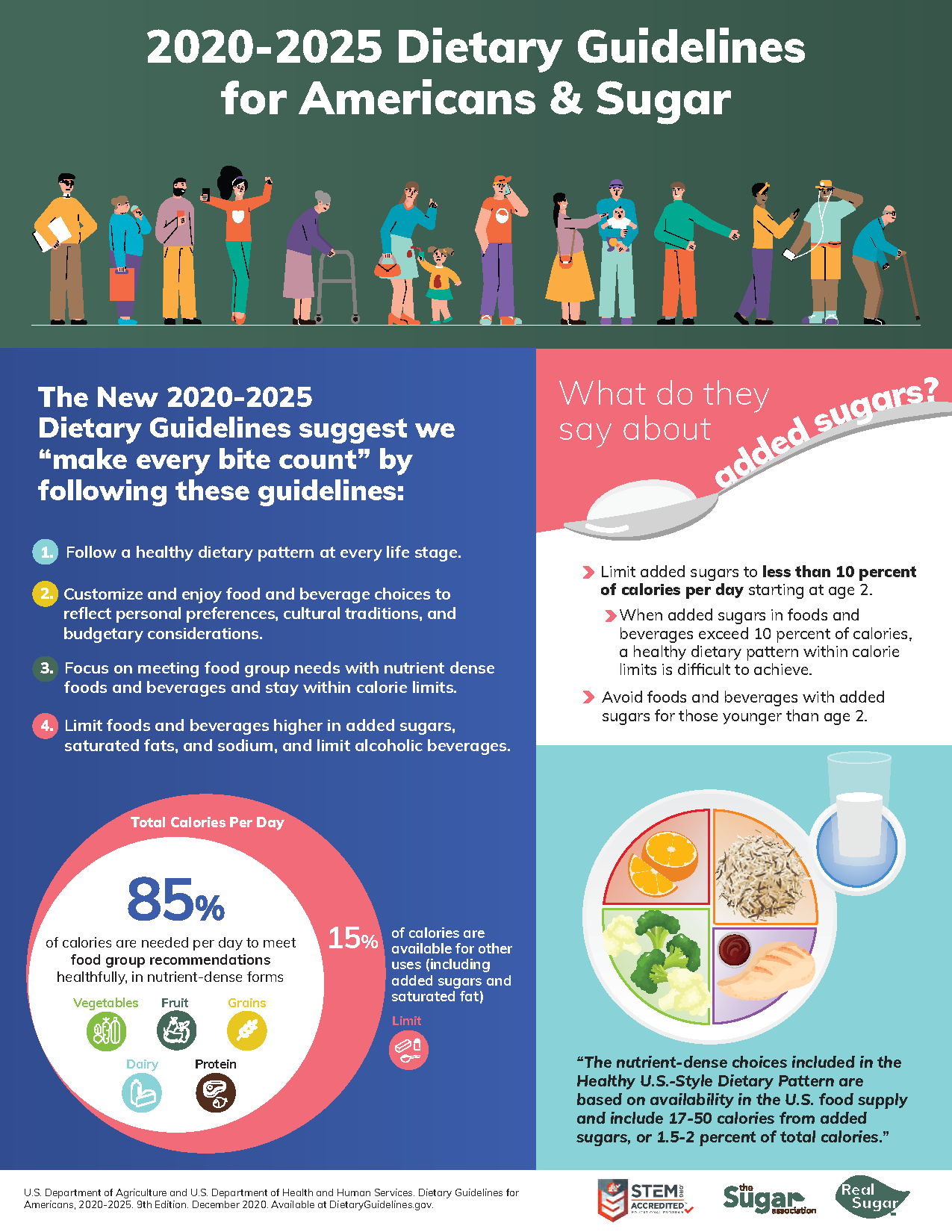
The 2020-2025 Dietary Guidelines for Americans emphasizes the importance of a healthy dietary pattern as a whole, rather than focus on individual nutrients, foods, or food groups. Learn more about what they say about sugar in this infographic.
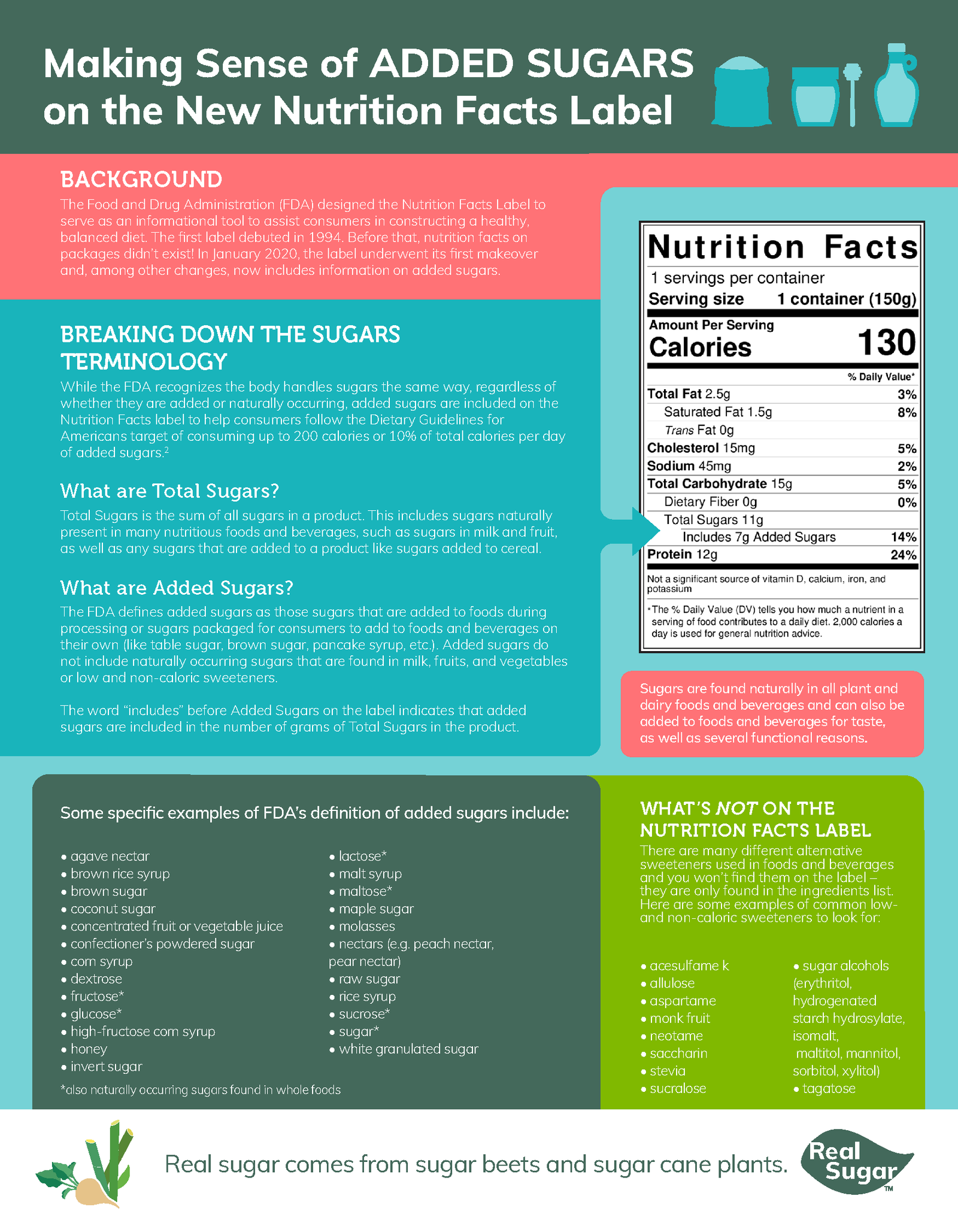
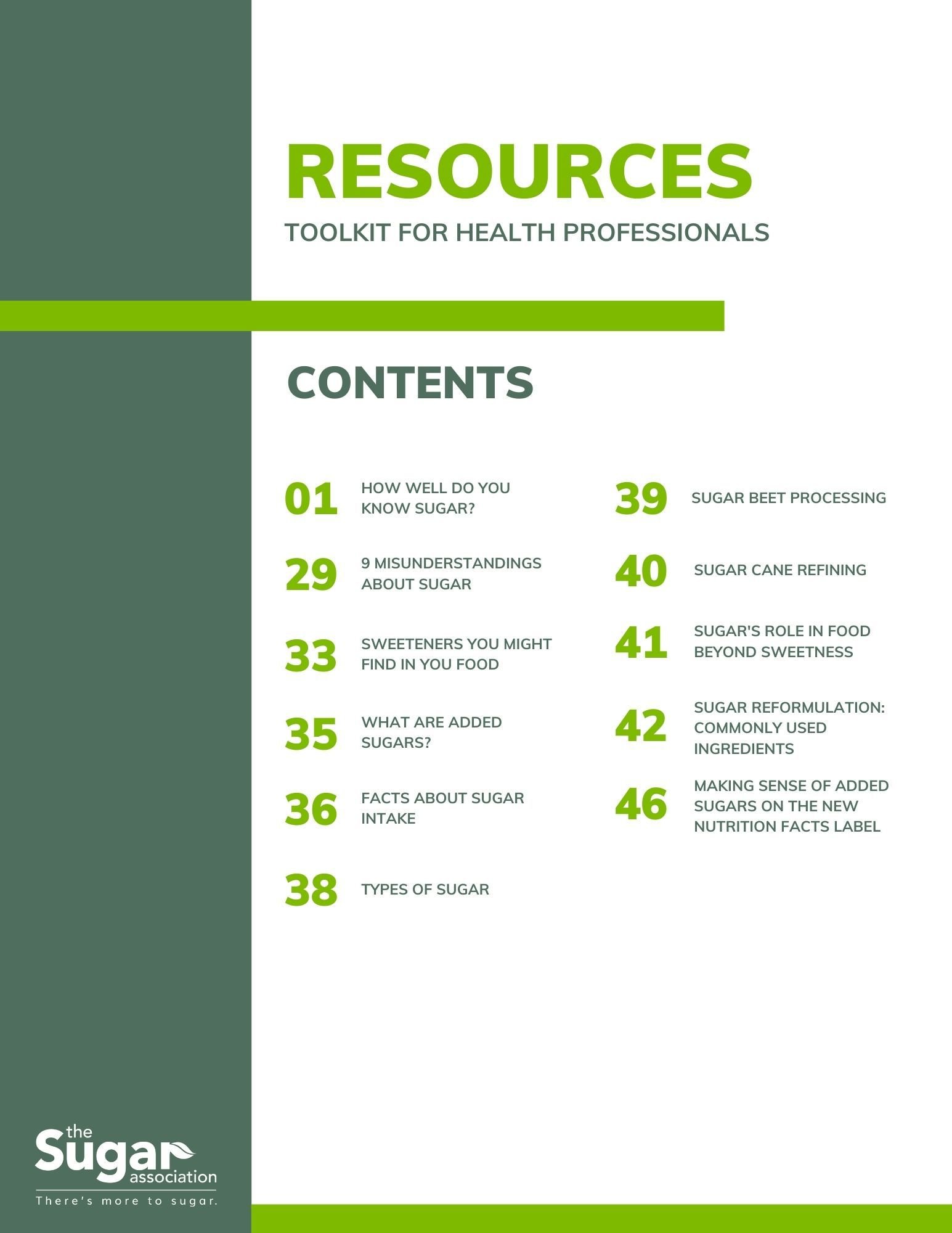
Making Sense of ADDED SUGARS on the New Nutrition Facts Label
In January 2020, the Nutrition Facts Label underwent its first makeover since it debuted in 1994 and, among other changes, now includes information on added sugars.
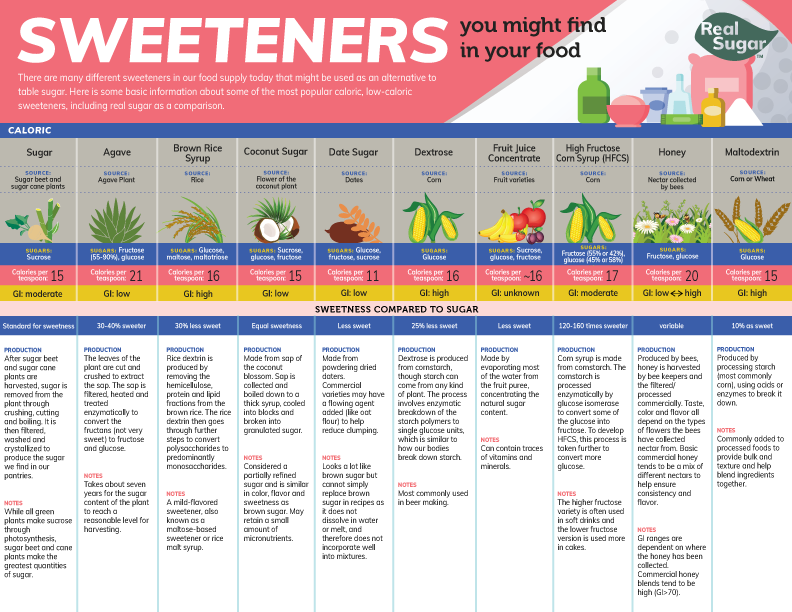
There are many different types of sweeteners in our food supply today that might be used as an alternative to table sugar. What is the source of these sweeteners? How are they made? How do they compare to sugar in terms of calories and sweetness? Find answers to those questions for some of the most popular sweeteners including sugar as a comparison.
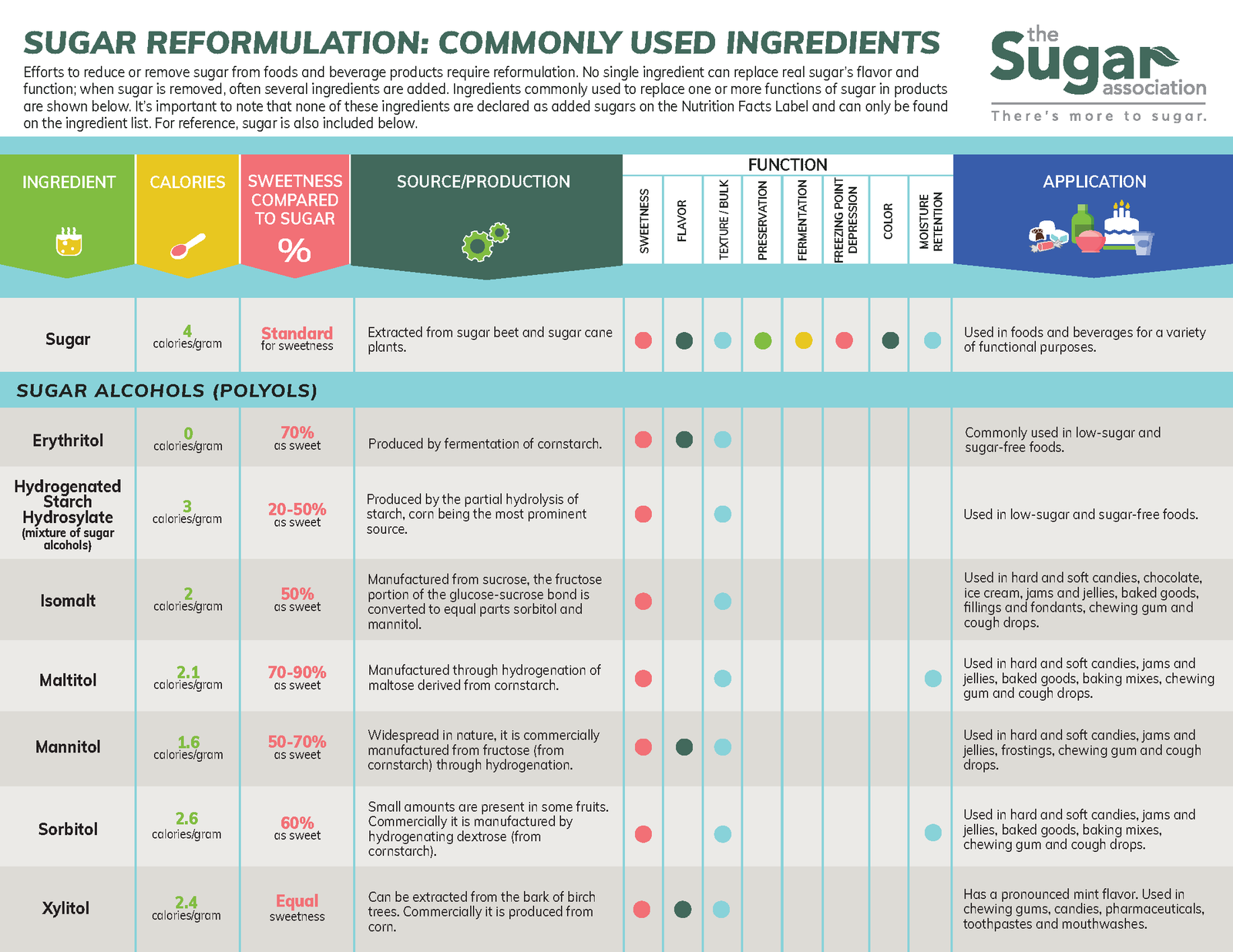
Efforts to reduce or remove sugar from foods and beverages require product reformulation. No single ingredient can replace real sugar’s flavor and function; when sugar is removed, often several ingredients are added. Ingredients commonly used to replace one or more functions of sugar can be found here.
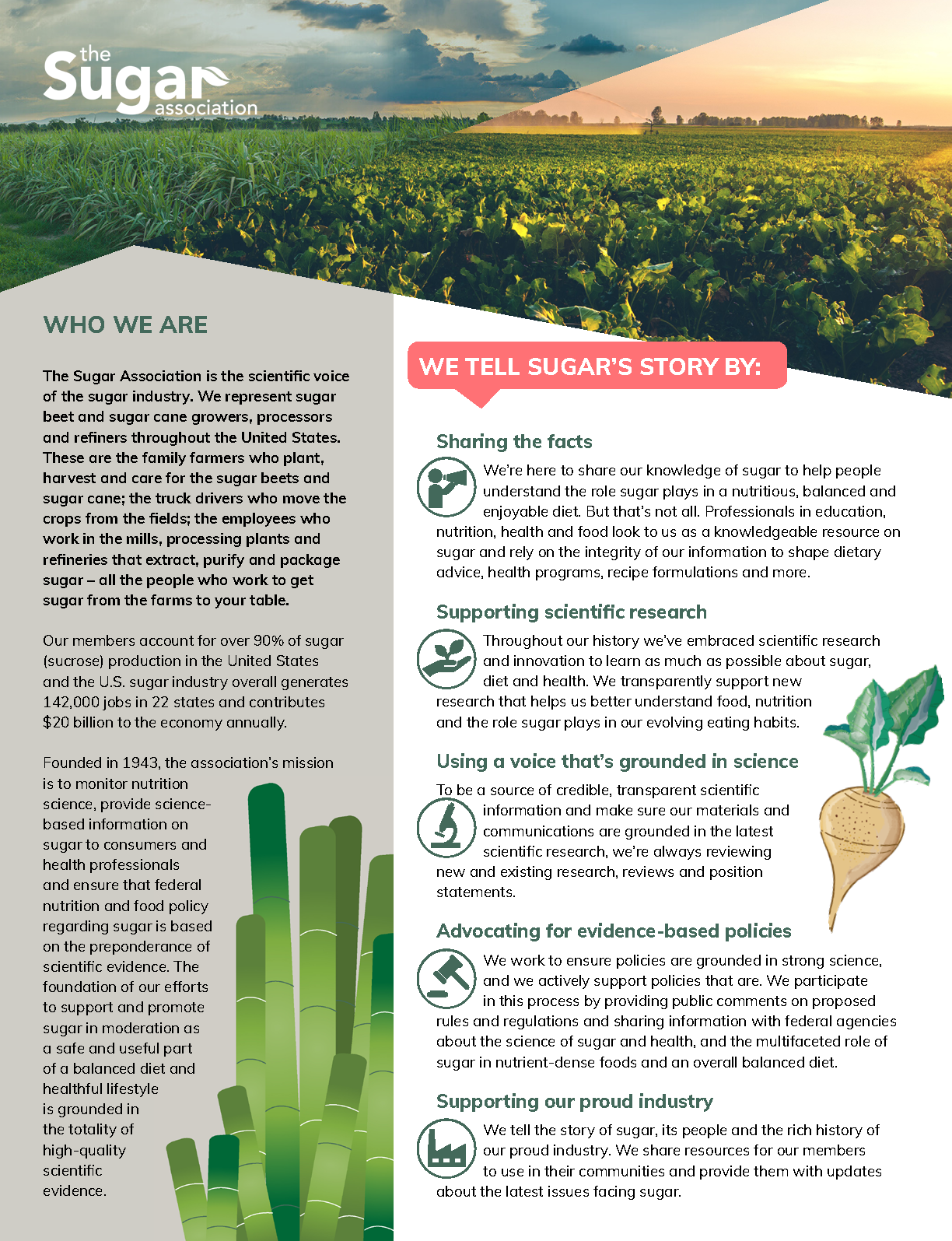
The Sugar Association is the scientific voice of the U.S. sugar industry, representing beet and sugar cane growers, processors and refiners. We tell sugar’s story by sharing the facts and the science on sugar.
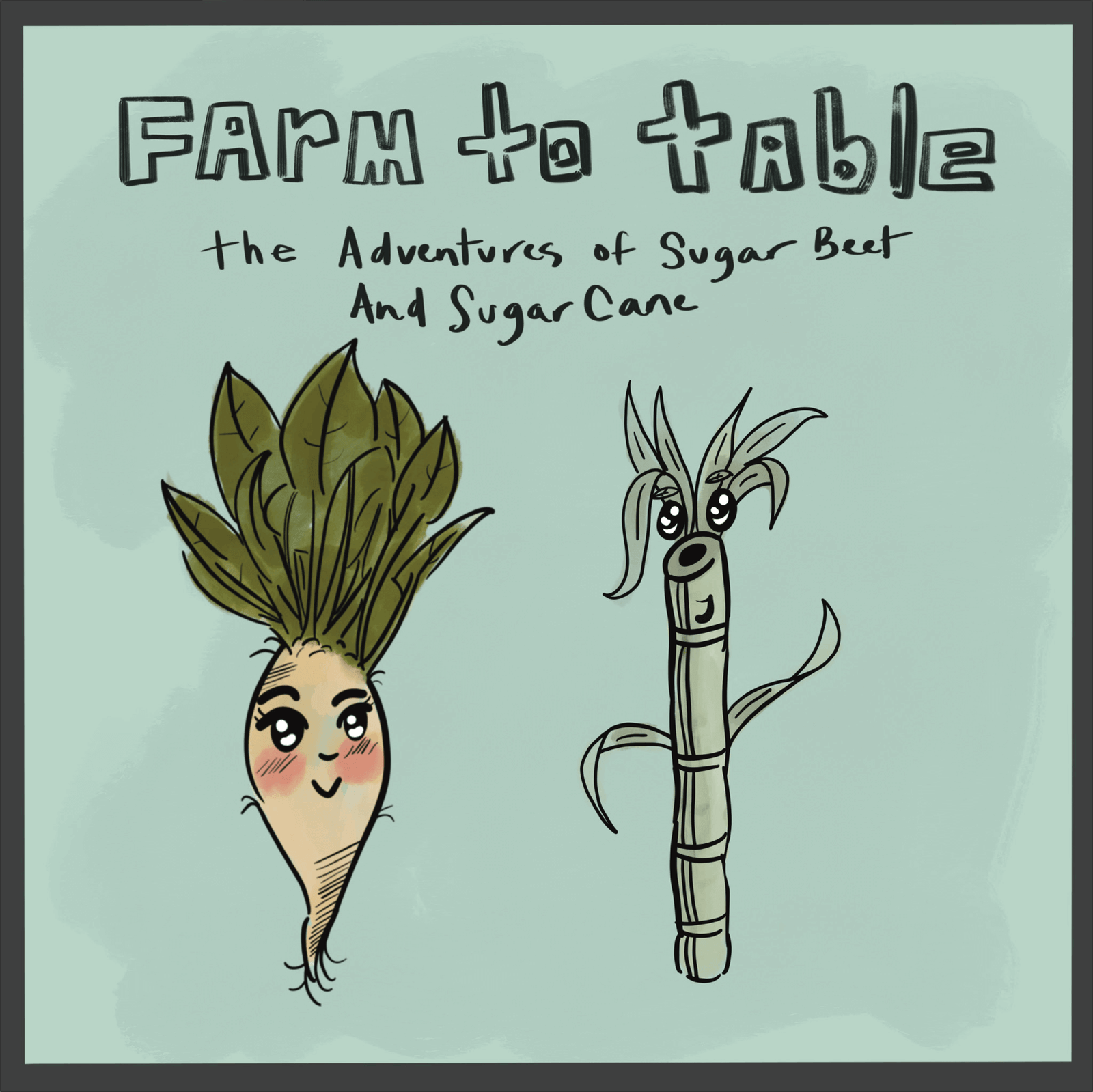
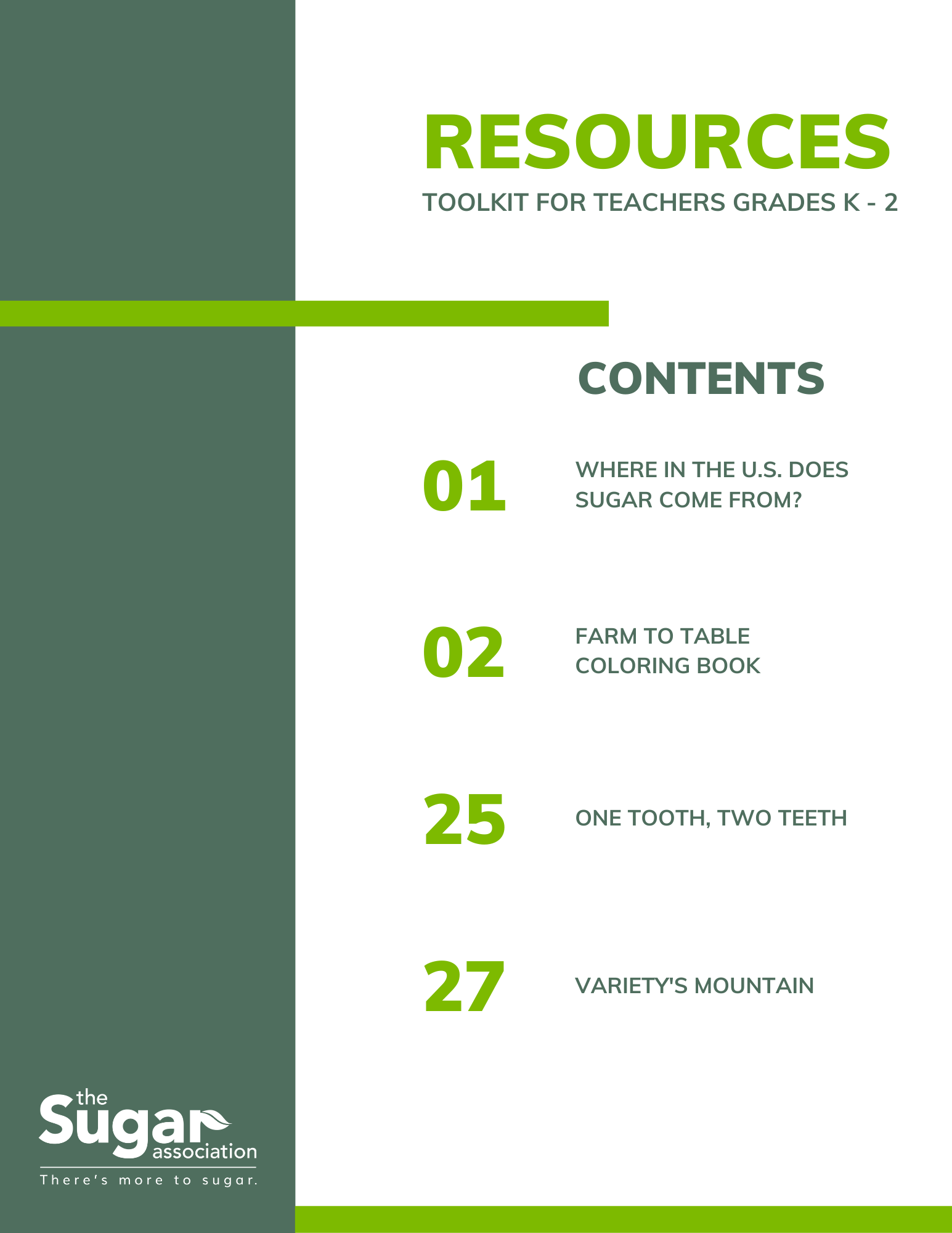
Farm to Table: The Adventures of Sugar Beet and Sugar Cane
This coloring book follows the journey of sugar beet and sugar cane from the farm to the table. Learn about the importance of a balanced diet and eating the right foods that give you fuel to play.
Join the cavity-free generation! This fun, hands-on brochure for children ages 4-8 is suitable for use in schools and dental offices. It’s an educational tool that introduces children to the importance of good dental care and regular visits to the dentist. It’s also available in Spanish.
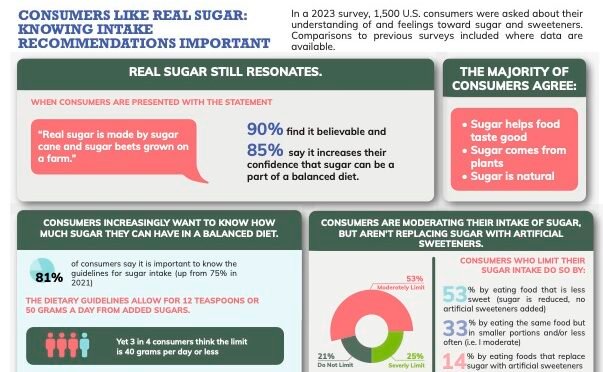
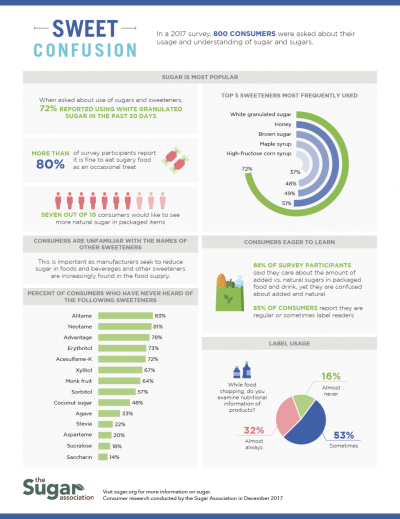
Consumers Like Real Sugar: Knowing Intake Recommendations Important
The majority of consumers agree sugar comes from plants and helps food taste good. They also increasingly want to know how much sugar they can have in a balanced diet.
This colorful brochure for young children explains the importance of nutrition and physical activity in a healthy lifestyle. It’s also available in Spanish.
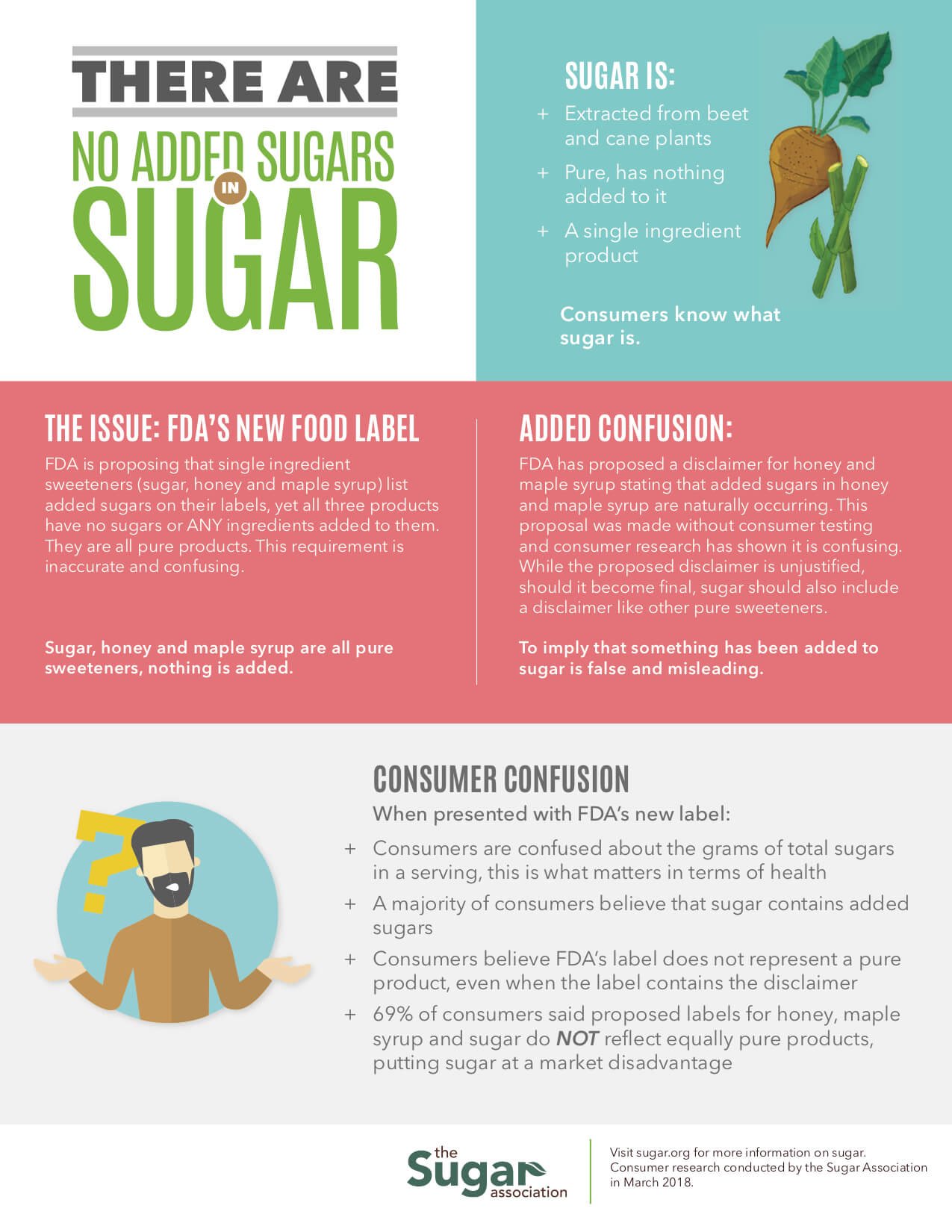
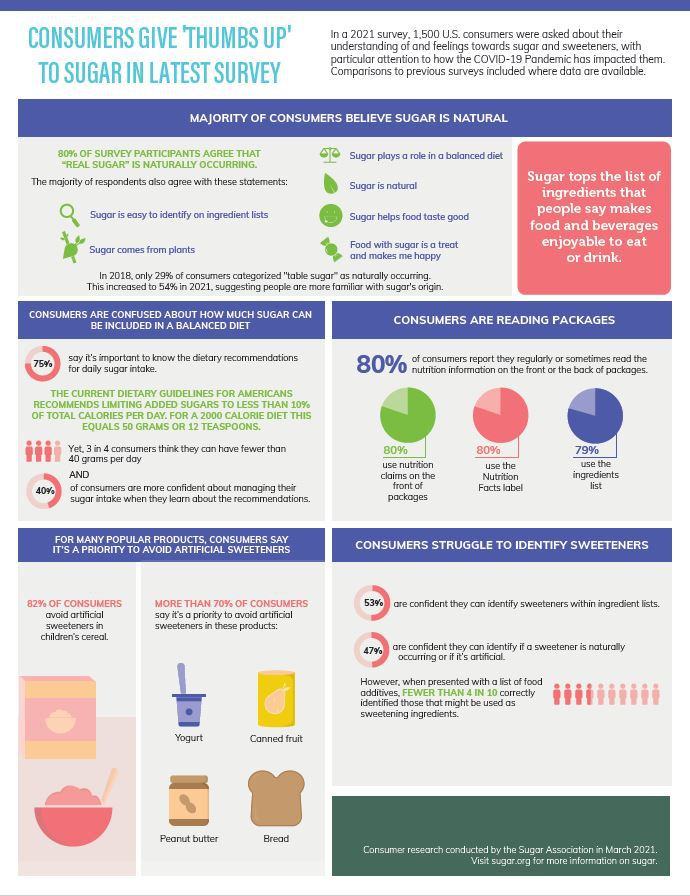
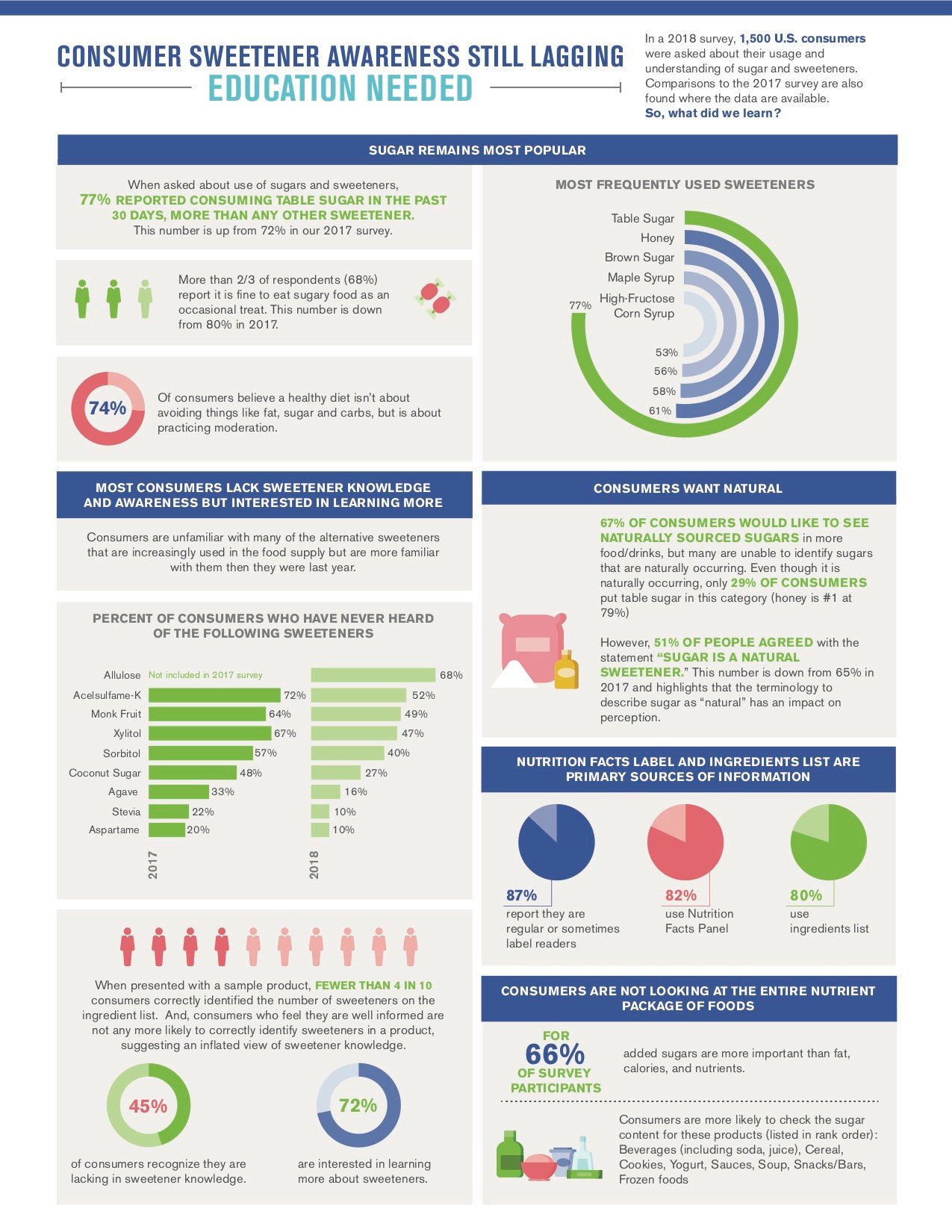
Consumer Sweetener Awareness Still Lagging, Education Needed: 2018 Consumer Research Summary
Sugar remains the most popular sweetener. This summary looks at what nutrition information consumers are using, what they are confused about, as well as their reasons for some of their dietary choices among consumers.
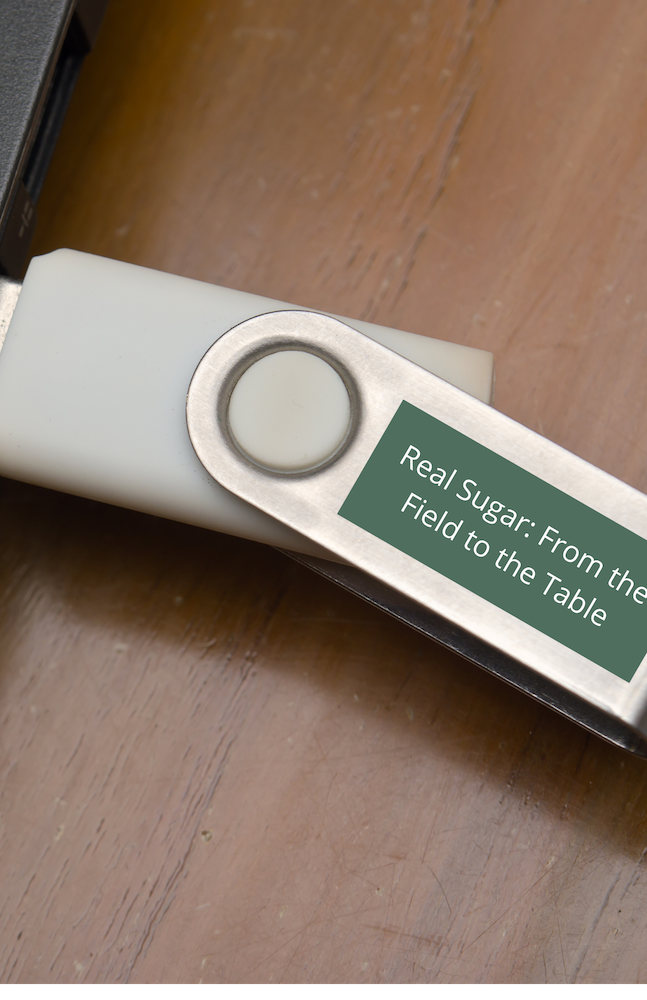
This thumb drive includes the printable version of the “Real Sugar: From the Field to the Table” STEAM packet as well as the accompanying videos for use in the classroom.
We’re here to share the facts about nature’s oldest sweetener. You can feel confident in the fact that it plays many roles in nutritious food—and about making room for occasional indulgences.