






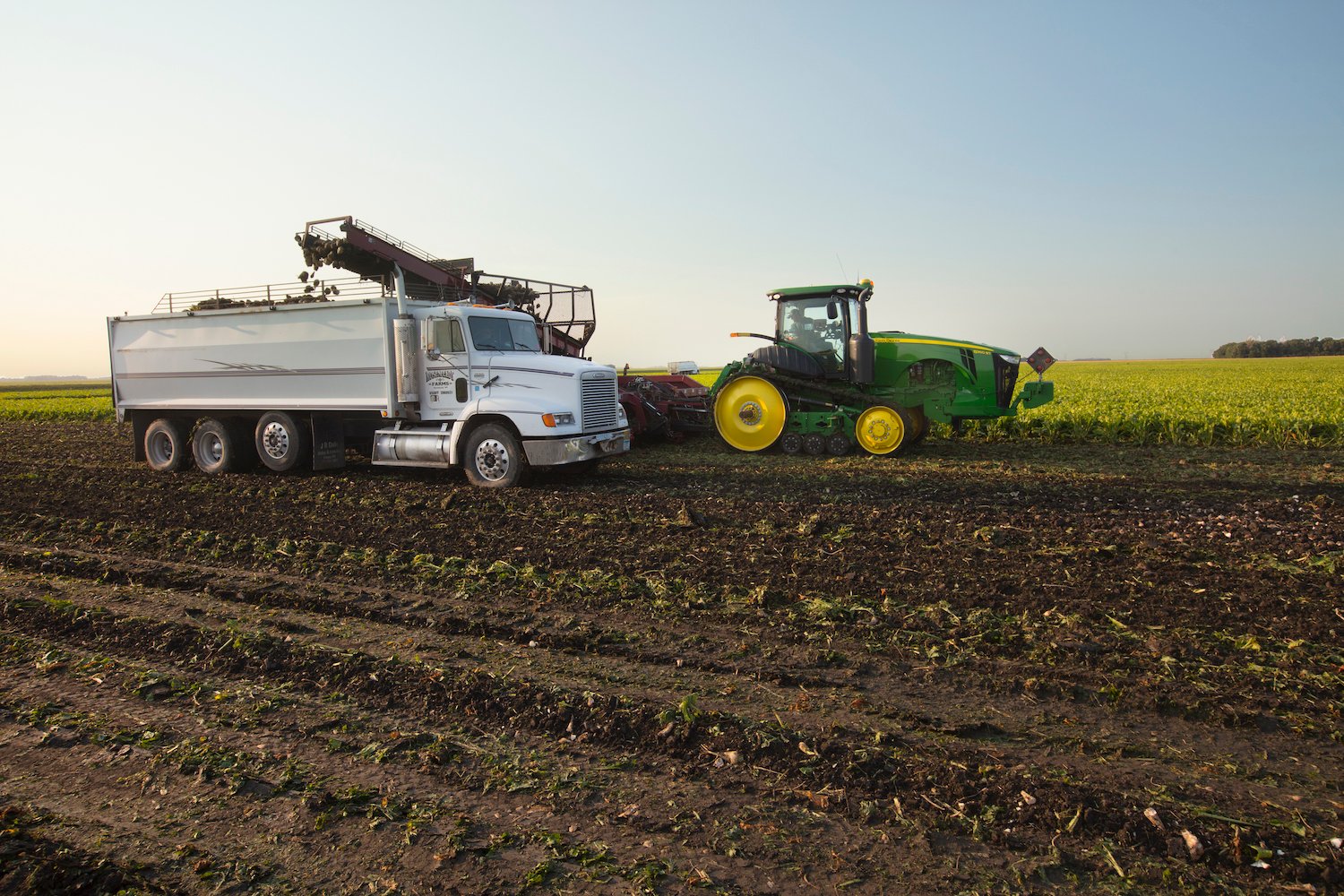
It’s harvest time for sugar beet growers, but if you’re not familiar with this particular crop you might not appreciate why it’s an especially important time of year. A little over half of the sugar in the United States comes from sugar beets, the other half comes from sugar cane. Both crops are grown on farms across the country, but for sugar beet growing communities, harvest is when everything kicks into high gear.
The period during which sugar beets are first harvested through to the last beet being processed is called a “campaign.” During the campaign, sugar beet factories operate twenty-four hours per day, seven days per week, providing seasonal employment opportunities in their communities. The campaign typically begins in September and continues until the available supply of sugar beets to process has been depleted, which generally occurs in May of the following year. An average campaign can run 250 days!
It’s a huge undertaking and many hands are required. But, how does it all come together?
It Starts in the Field
While still in the ground, the beets are first defoliated by a special tractor that removes their tops with flails and knives called scalpers.
On a separate tractor, a beet digger using wheels that are set on angles pops the sugar beets out of the ground and picks them up. They get an initial cleaning as the digger runs them over a set of rollers and into a holding tank. The beets are then loaded into the bed of a truck being driven in perfect unison alongside the harvesting tractor.
Piling Beets
When full, the truck hauls the sugar beets to a receiving station where they are weighed, and samples are taken to determine average sugar percentage of a given load. (The average sugar content of sugar beets is about 16%, but some are closer to 20%.) After a secondary cleaning, a boom conveyer stacks the beets in piles 20 feet high, several hundred feet wide and as long as space will allow.
Piling beets is deceptively tricky and requires expertise. Proper pile design and ventilation are vital as both hot spots and frozen beets can cause an entire pile to rot.
Once harvest is complete, sugar beet piles are continually monitored. Pile temperatures are tracked to ensure that they remain cool and stable. Some of the beets will stay in the pile for close to 5 months, so it’s important that there aren’t drastic temperature changes throughout the winter that might cause damage. If needed, beets are also moved to covered or cold storage.
From Sugar Beet to Real Sugar
The sugar beets will slowly be re-hauled from the receiving station into the nearby factory where they are processed. Sugar beet factories are self-contained facilities, so beets are quickly moved through processing where they are washed, sliced into strips and boiled. The boiling causes sugar crystals to form. After cooling, the sugar crystals are spun in a centrifuge to remove naturally occurring molasses. The sugar is then dried and packaged.
From the farm to your pantry, the result is pure, real sugar.