






Background
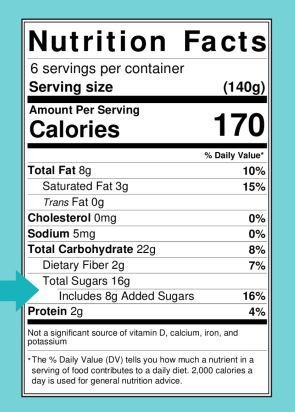
The Food and Drug Administration (FDA) designed the Nutrition Facts Label to serve as an informational tool to assist consumers in constructing a healthy, balanced diet. The first label debuted in 1994. Before that, nutrition facts on packages didn’t exist! In January 2020, the label underwent its first makeover and, among other changes, now includes information on added sugars.
Breaking Down the Sugars Terminology
While the FDA recognizes the body handles sugars the same way, regardless of whether they are added or naturally occurring,1 added sugars are included on the Nutrition Facts label to help consumers follow the Dietary Guidelines for Americans target of consuming up to 200 calories or 10% of total calories per day of added sugars.2
What are Total Sugars?
Total Sugars is the sum of all sugars in a product. This includes sugars naturally present in many nutritious foods and beverages, such as sugars in milk and fruit, as well as any sugars that are added to a product like sugars added to cereal.
What are Added Sugars?
The FDA defines Added Sugars as those sugars that are added to foods during processing or sugars packaged for consumers to add to foods and beverages on their own (like table sugar, brown sugar, pancake syrup, etc.). Added sugars do not include naturally occurring sugars that are found in milk, fruits, and vegetables or low and non-caloric sweeteners. You can find examples of added sugars here.
The word “includes” before Added Sugars on the label indicates that added sugars are included in the numbers of grams of Total Sugars in the product.
What is Daily Value?
A Daily Value is the reference amount for consumption of a nutrient over the course of an entire day. On the Nutrition Facts Label, most nutrients have a % Daily Value listed next to the amount of the nutrient in a serving. The % Daily Value indicates how one serving of that product contributes to the total day’s intake for each nutrient.
- For added sugars, the Daily Value is 50 grams per day, or 10% (200 calories) of a 2,000 calorie diet. The Daily Value for added sugars is based on the Dietary Guidelines for Americans target for added sugars consumption.2
- There is no Daily Value for total sugars because a recommended intake has not been established.
What’s Not on The Nutrition Facts Label?
There are many different alternative sweeteners used in foods and beverages and you won’t find them on the label – they are only found in the ingredients list. Here are some examples of common low and non-caloric sweeteners to look for:
- acesulfame k
- allulose
- aspartame
- monk fruit
- neotame
- saccharin
- stevia
- sucralose
- sugar alcohols (erythritol, hydrogenated starch hydrosylate, isomalt, maltitol, mannitol, sorbitol, xylitol)
- tagatose
Here are a few additional resources to help you navigate sugars and sweeteners in your foods:
Making sense of Added Sugars on the New Nutrition Facts Label
Sweeteners you might find in your food