
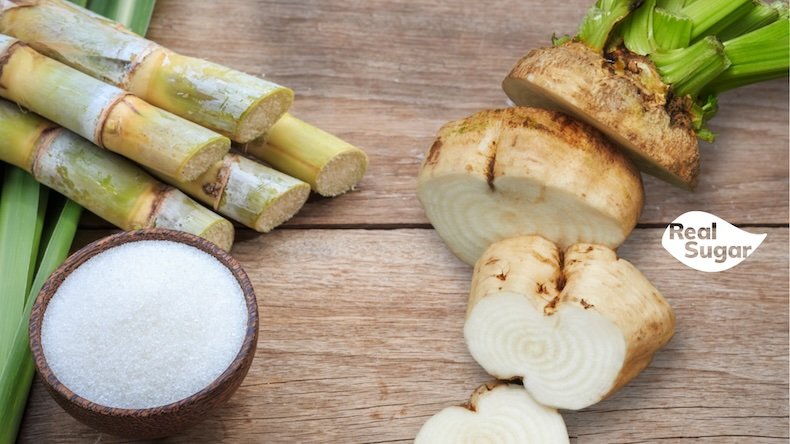






There are many myths about sugar out there, including several around sugar and how it’s made. We’ve compiled the most common myths about sugar that we hear at the Sugar Association and have provided some clarifying facts.
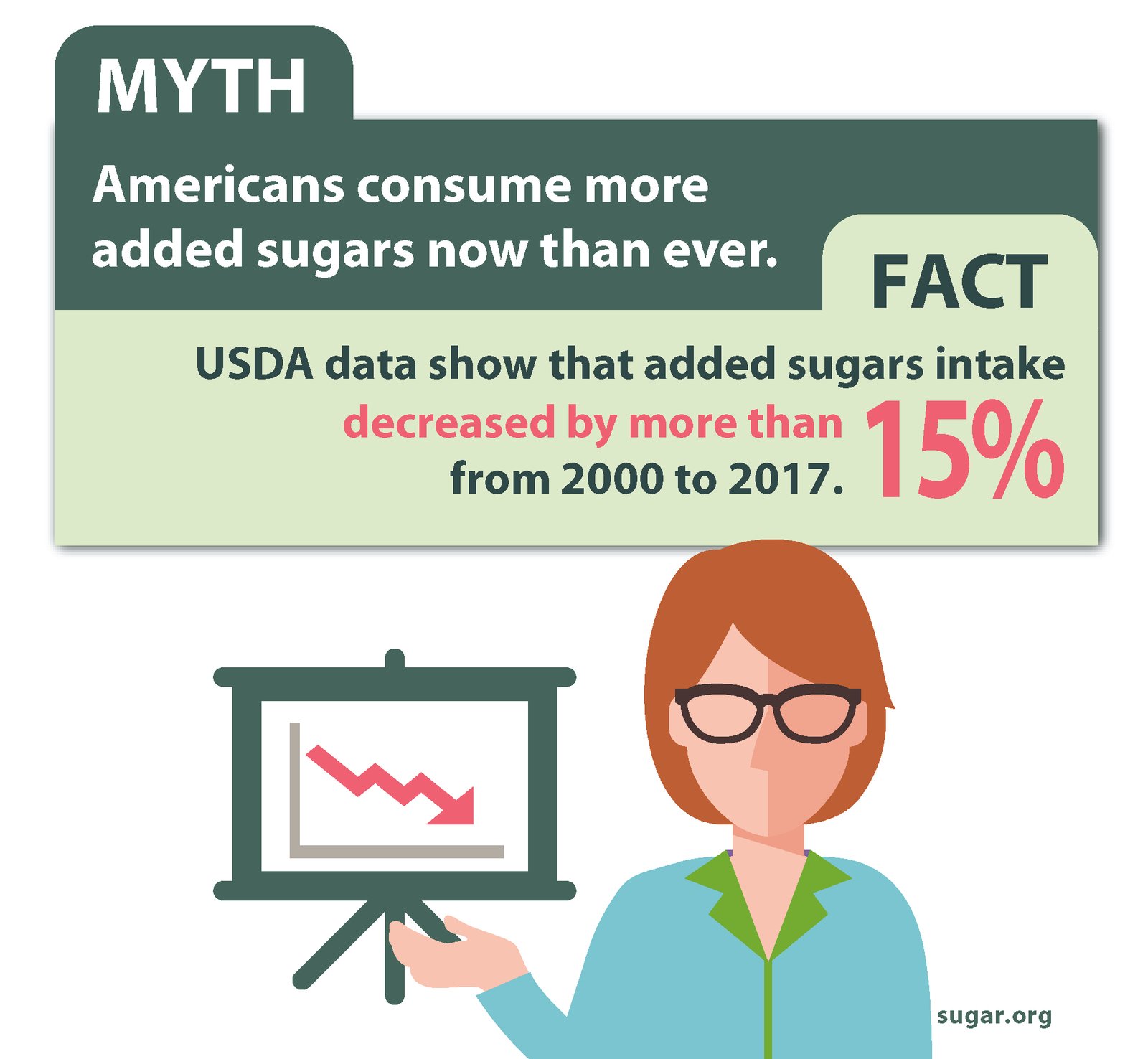
| MYTH: Americans consume more added sugars now than ever before.
FACT: US Department of Agriculture data shows that added sugars intake decreased by 30% from 2000 to 2016.1 In 2015-2016, added sugars consumption was 12.6% of total calories, or around 260 calories per day.[2][3] Current intakes are only ~60 calories above the current Dietary Guidelines for Americans recommendation of 10% of calories from added sugars per day.[4] |
 |
| MYTH: Sugar is addictive.
FACT: Scientific evidence does not support the idea that sugar (or any other foodstuff) can be addictive.5,6,7 Eating something you enjoy increases dopamine in the same way all pleasurable experiences do, but addiction and pleasure are not the same thing. All that scientific literature tells us is that sugar tastes good and people like eating food that tastes good. |
 |
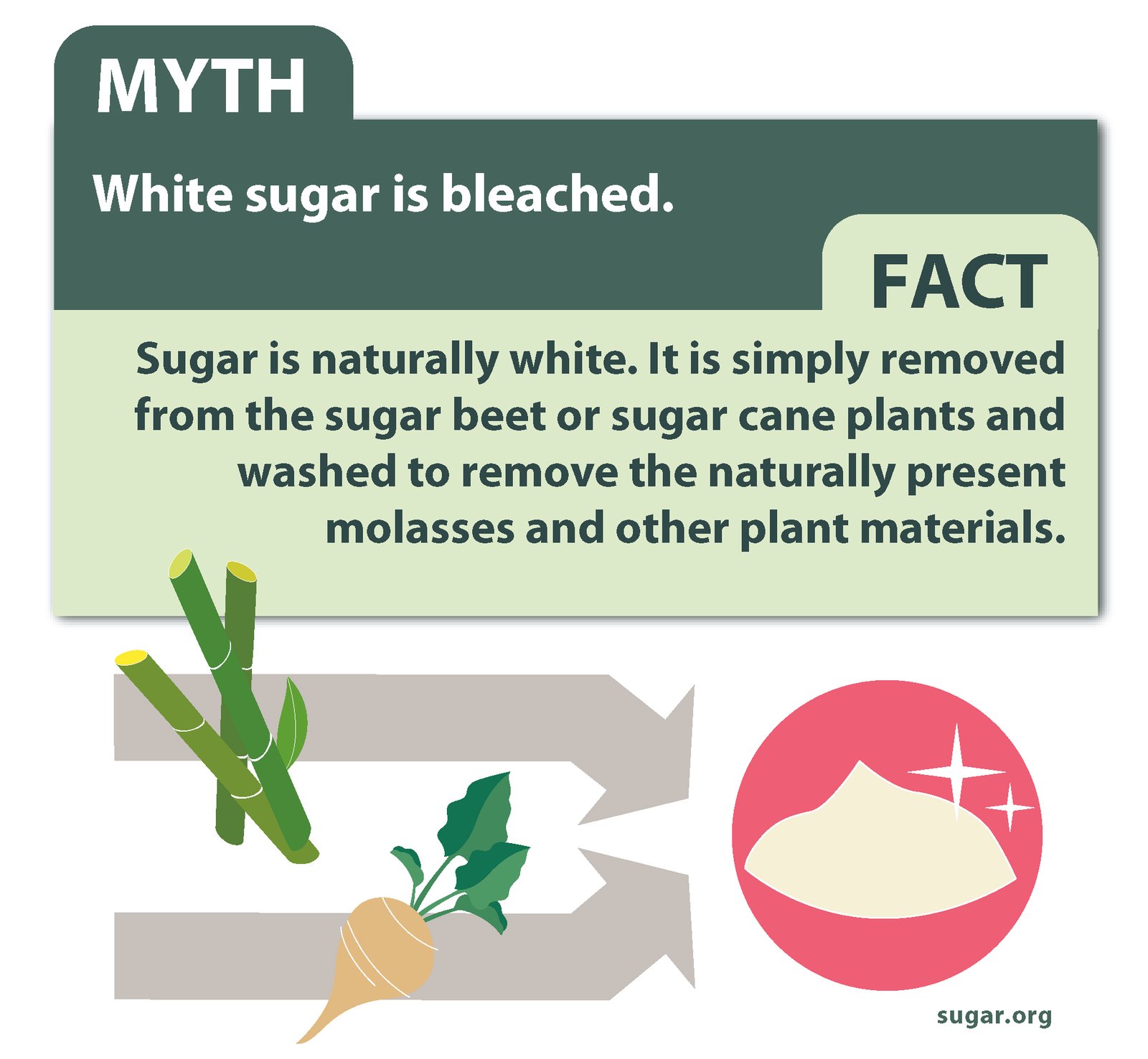
| MYTH: White sugar is bleached.
FACT: Real sugar is naturally white. The same pure sugar found in sugar beet and sugar cane plants is what ends up in your pantry. The sugar juice extracted from the sugar beet or sugar cane plants is filtered to remove the non-sugar plant materials like soil and plant fibers and then the juice is crystallized. The crystals go through a few cycles of washing and spinning in a centrifuge to remove the naturally present brown molasses, resulting in white sugar. |
 |
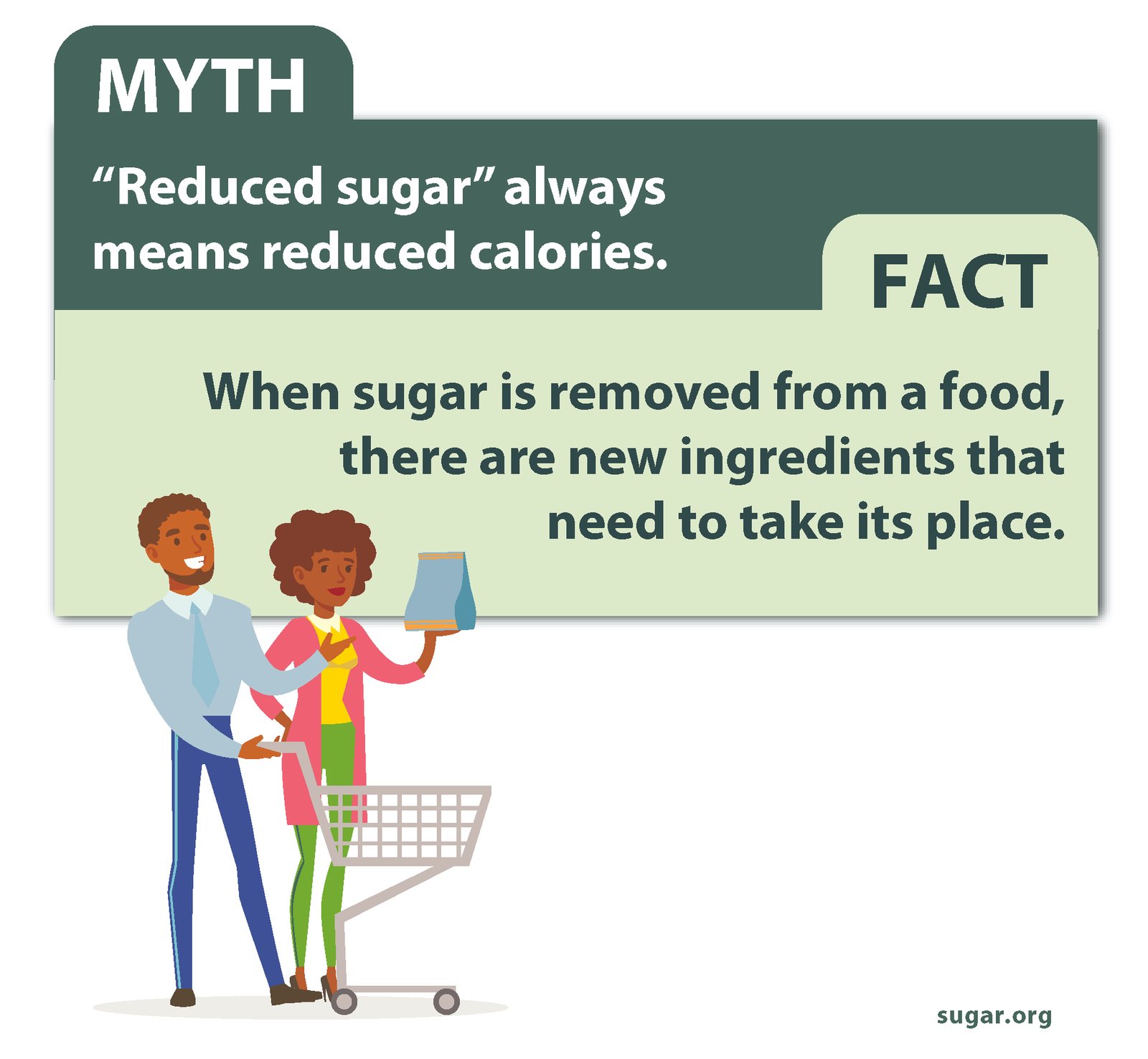
| MYTH: “Reduced sugar” always means reduced calories.
FACT: When sugar is removed from a food, new ingredients need to be added to replace both the flavor and functionality of sugar. These ingredients often bring the same or even more calories to a product than sugar does. So, before you think less sugar means fewer calories, compare product labels to see what the entire nutrient package of a product is. |
 |
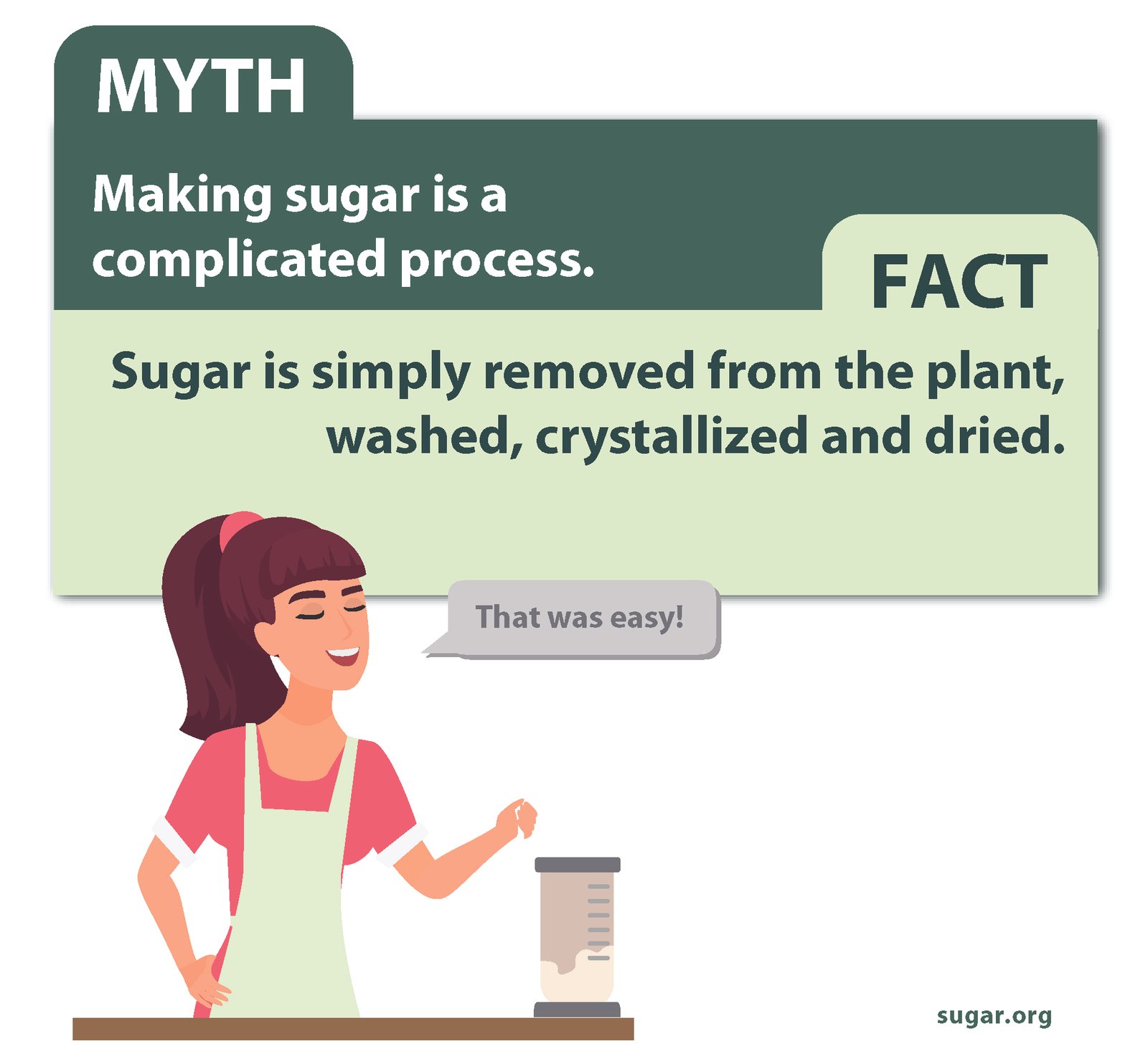
| MYTH: Sugar is highly processed.
FACT: Sugar is a minimally processed food; you could even extract sugar at home. Sugar is simply removed from the plant, washed, crystallized, spun and dried. The same sugar found naturally in the plant is what ends up in your pantry. Whether sugar comes from sugar beets or sugar cane, the purification process is similar for each plant and the result is the same pure sucrose. |
 |
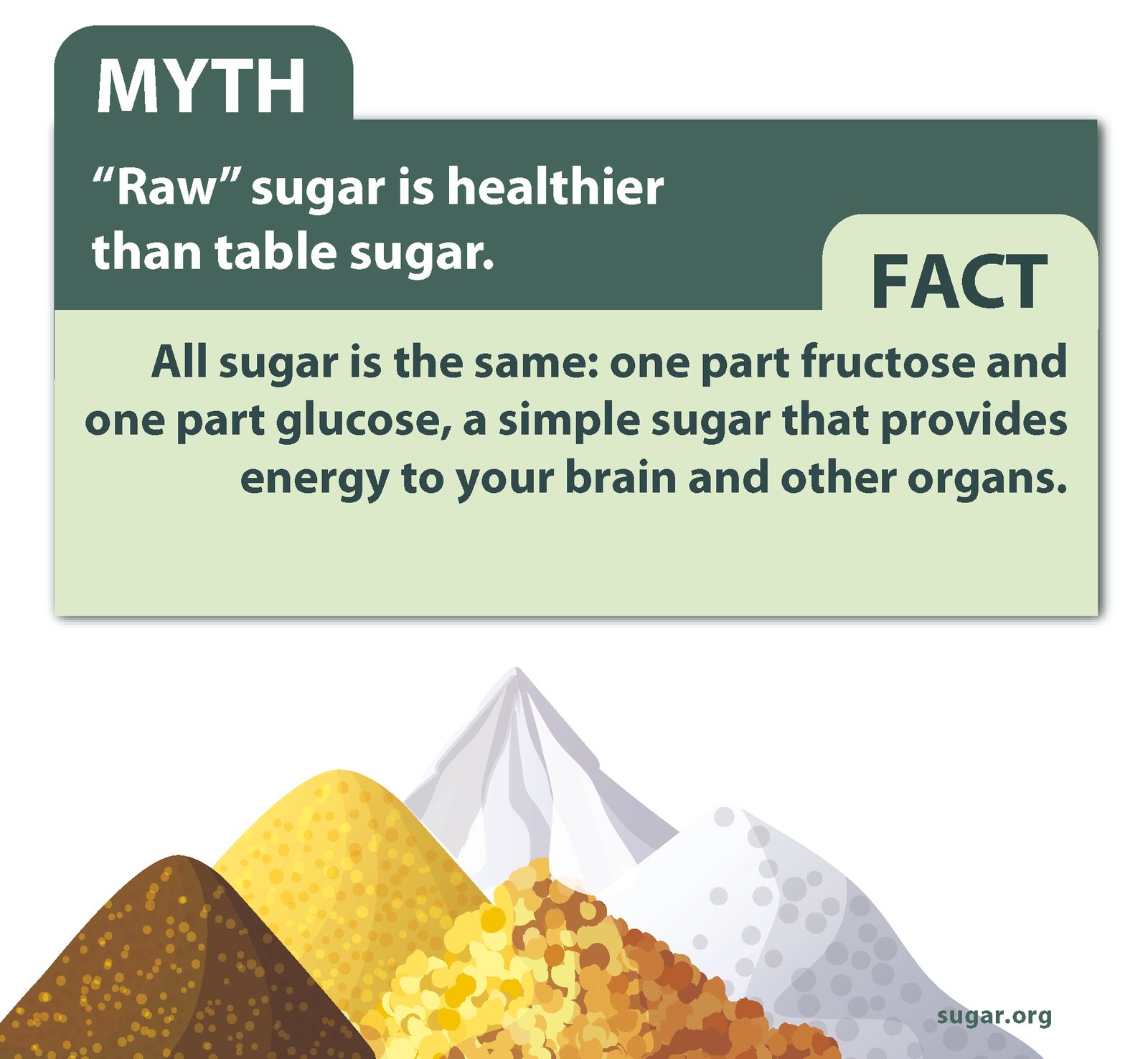
| MYTH: “Raw” sugar is healthier than table sugar.
FACT: Your body handles sugar the same, regardless of what color it is. Raw sugars, brown sugars and white sugars are all processed the same by the body. Darker colored sugars have more molasses left on the sugar crystals. The nutrients that are contained in this small amount of molasses are so small that they offer no real nutritional value. |
 |
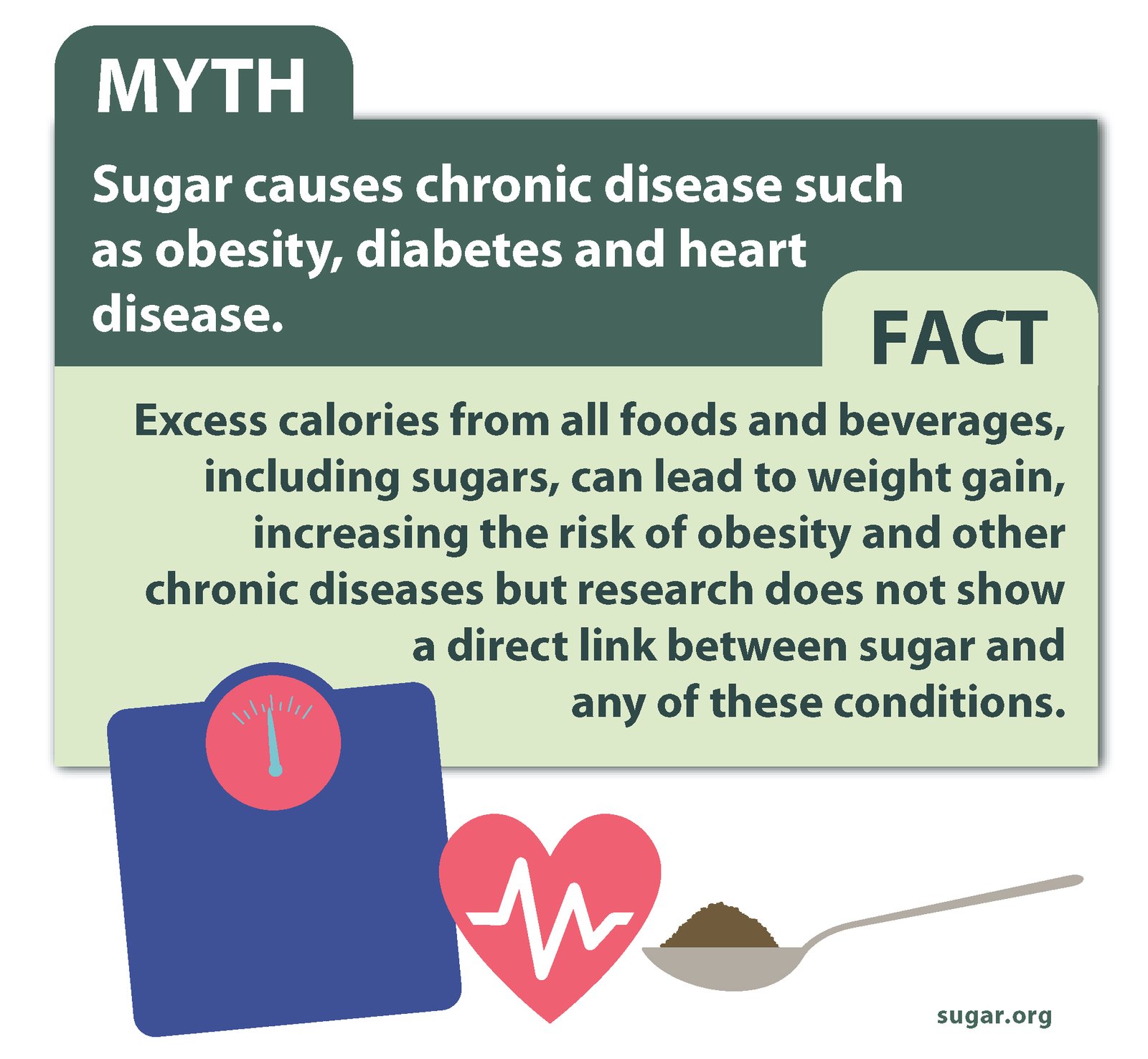
| MYTH: Sugar causes chronic diseases such as obesity, diabetes and heart disease.
FACT: Excess calories from all food and beverages, including sugars, can lead to weight gain, increasing the risk of obesity and other chronic diseases; however, research does not indicate that there is a direct link between sugar intake and any of these conditions.8,9,10,11,12 |
 |
As the scientific voice of the industry, we aim to put the science and facts into conversations around sugar. Download more myths and facts here: